





Beetroot's Ruby Stain
Long before the advent of commercial lipsticks, ancient Indian queens embraced the humble beetroot as a primary source for lip color. This vibrant root vegetable,
rich in betalain pigments, offered a spectrum of deep red to soft pink hues that naturally stained the lips. Beyond mere coloration, beetroot was also valued for its hydrating properties, bestowing a dewy, nourished appearance akin to a subtle, no-makeup look. Even today, cosmetic brands strive to recreate the authentic, effortless charm that beetroot provided centuries ago, underscoring its enduring appeal as a natural beauty enhancer.
Lac: Royalty's Gloss
Lac, also known as Laksha, was a highly coveted natural dye in ancient India, derived from the resinous secretions of insects. This precious ingredient yielded a luxurious, glossy dark red pigment that was intricately linked with notions of ritual and royal status. Its application extended beyond the lips, serving as a vibrant stain for the feet (alta) and a delicate blush for the cheeks. The profound richness and striking visual impact of lac quickly became symbols of sensuality and elevated social standing, representing a true mark of luxury for those who could adorn themselves with its opulent color.
Manjistha's Earthy Red
Manjistha stands as a cornerstone ingredient in Ayurvedic beauty practices, frequently incorporated into both coloring agents and skincare formulations. It imparts a beautiful, earthy red to pinkish tint, and is still processed into pastes and powders for contemporary use. Esteemed for its internal blood-purifying benefits that contribute to healthier skin, Manjistha offers a holistic approach to beauty. For an exceptionally smooth application and enhanced efficacy, it is traditionally mixed with nourishing oils and ghee, making it a prime choice for those seeking truly 'clean beauty' solutions.
Saffron & Turmeric Glow
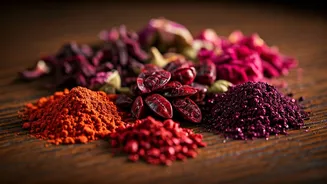
Not all ancient lip colors were confined to the red spectrum; some offered a softer, more luminous radiance. Saffron, or 'kesar', is renowned for its delicate orangish-golden glow. When skillfully blended with turmeric and other complementary botanical elements, it produced a warm, inviting orangish hue that was considered exquisitely beautiful. This particular combination was favored by brides and queens who appreciated a subtle sheen and a sheer, flattering color that enhanced their natural beauty without overpowering it.
Floral Pigmentations
Flowers played an indispensable role in the natural beauty repertoire of ancient Indian women. Petals from blossoms like roses and bougainvillea were meticulously crushed to extract their vibrant pigments. These natural colorants were then artfully combined with oils and beeswax to create soft, balmy lip shades. The versatility of floral pigments allowed for a diverse range of colors, from striking bright reds to gentle, soft pinks, demonstrating how heavily nature's blooms were relied upon as sophisticated makeup in ancient times.