




Vinicunca's Painted Stripes
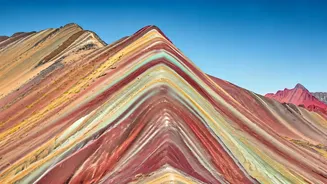
Nestled in Peru, Vinicunca, famously known as the Rainbow Mountain, captivates with its vivid, almost surreal stripes of red, yellow, and turquoise. These
striking colors are not the work of an artist but rather a testament to diverse mineral deposits accumulated over eons. The mountain's appearance shifts dramatically with the changing sunlight, enhancing its otherworldly allure. Its unique coloration makes it a prime example of how geological processes can create breathtaking natural art, drawing visitors from across the world to witness this geological marvel firsthand and experience its vibrant geological tapestry.
Zhangye's Layered Wonders
In China, the Zhangye Danxia National Geopark presents a landscape that seems plucked from a fantasy novel. This region boasts rolling hills adorned with layered bands of intense reds, oranges, and yellows, presenting a naturally striped terrain that has been millions of years in the making. The remarkable formations are the result of sedimentary rock and mineral deposits being uplifted and eroded over an immense geological timescale. This slow, persistent shaping by nature has created a visual spectacle of naturally occurring strata, offering a unique glimpse into the Earth's ancient past and its dynamic geological history.
Cotton Candy Hills
The "Hill of 14 Colours," situated in Chile, presents a mesmerizing display of angular rainbow patterns that are simply astounding. This geological formation is characterized by its distinct layers, each contributing a different hue to the mountain's overall spectrum. As the day progresses and light conditions change, the colors of this mountain transform, appearing even more magical and dynamic. This constant interplay of light and color offers a unique viewing experience, making it a highlight for those seeking to witness nature's most vibrant and artistic expressions.
Bisti/De-Na-Zin's Palette
The Bisti/De-Na-Zin Wilderness Area in New Mexico, USA, offers a different kind of rainbow wonder, with softly layered hills that exhibit bands of red, gold, and black. These subtly shifting colors are a direct reflection of ancient climate shifts recorded in the rock strata. The geological makeup here acts as a visual timeline, allowing observers to 'read' the Earth's history through its colorful bands. This serene yet spectacular landscape provides a profound connection to geological time, showcasing how past environmental changes have sculpted the land into a natural work of art.
Calafate's Ancient Hues
While not explicitly named in the provided text, many regions globally showcase similar soft, layered hills with bands of color influenced by ancient climates. These areas often feature geological compositions that, like Bisti/De-Na-Zin, reflect historical environmental conditions through their mineral and sedimentary layers. The resulting spectrum, often including reds, golds, and darker tones, creates a visually rich landscape that tells a story of Earth's past. These formations serve as natural museums, illustrating how geological processes and climate variations have sculpted the planet over millennia.