




The Painful Reality
Many DIY enthusiasts are familiar with the jarring sound of hammer meeting bone, a common consequence of nailing tasks. While often dismissed as an unavoidable
hazard of home improvement, this can lead to severe fractures and lacerations requiring medical attention. Holding a nail directly puts your fingers in the direct line of impact, and even a momentary lapse in concentration can result in a trip to the emergency room. The accuracy needed for hammering, balancing swing force with precision, leaves little room for error when done manually. This delicate act of aligning strength and pinpoint accuracy, especially in awkward positions like on a ladder or near baseboards, amplifies the risk of injury. The seemingly small act of missing the nail can have significant physical repercussions, often underestimated until it's too late.
A Simple, Smart Solution
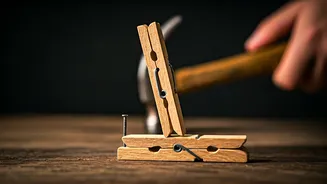
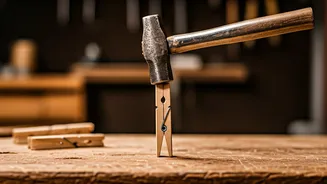
Instead of enduring painful injuries or investing in expensive equipment, a surprisingly effective solution lies in an everyday item: the clothespin. This humble laundry tool can revolutionize your hammering experience by providing a secure grip on nails, keeping your fingers safely distanced from the impact zone. By simply attaching the nail to the clothespin, you gain a new, safer way to hold it. This method is incredibly cost-effective and bypasses the potential risks associated with advanced tools like pneumatic nail guns, which, despite their power, come with their own set of drawbacks and are often overkill for typical household jobs. The clothespin offers a practical, accessible, and highly efficient alternative for most home improvement tasks.
Mastering the Clothespin Trick
Implementing this ingenious technique is remarkably straightforward. Begin by selecting a sturdy wooden clothespin equipped with a strong spring mechanism. Insert the nail firmly into the clothespin's jaws, ensuring it's held perpendicular to the wood. This creates a stable platform, positioning your hand several inches away from the nail head. Carefully place the nail and clothespin assembly against the surface you're working on, giving it a few gentle taps to set the nail in place. Once the nail stands securely on its own, you can safely remove the clothespin and proceed with hammering. This method is particularly beneficial when dealing with small finishing nails or in confined spaces where your hand might obstruct your view of the target, preventing accidental damage to the surrounding material or finish.
Boosting Confidence and Safety
Beyond preventing physical harm, this simple trick significantly boosts confidence, especially for beginners. When teaching someone new to DIY, like a child or a friend, using a clothespin to hold the nail transforms a potentially intimidating task into an enjoyable learning experience. It eliminates the primary concern of accidental injury, allowing the learner to focus on mastering the hammer swing. This safe and accessible method encourages practice and builds self-assurance. Ultimately, the most brilliant DIY solutions are often the most basic, economical, and intuitive. By repurposing an item already found in most homes, you can avoid unnecessary injuries and ensure your projects progress smoothly, making hammering a more pleasant and successful endeavor.