




Ethical Claims Under Fire
A significant legal challenge has been launched in the Netherlands against a well-known denim brand. The lawsuit, brought forth by an international labour
rights organization and several consumers, alleges that the company made misleading statements regarding its commitment to ethical labour practices. Specifically, the suit points to a Turkish factory that allegedly used violence against workers protesting for better conditions, leading to their subsequent dismissal. This situation highlights a growing concern in the fashion industry about 'social washing,' where declarations of responsibility are used more as a marketing tool than a reflection of actual operational standards, prompting a closer examination of supply chain transparency and genuine worker welfare.
Innovation For Sustainability
A substantial grant of $34 million from the Bezos Earth Fund is fueling advancements in textile and material science. This initiative, involving experts from across the United States, is dedicated to developing groundbreaking solutions beneficial to both people and the environment. The focus includes the creation of novel fabrics that mimic natural materials like cotton, silk, and rayon, but are produced using advanced methods such as bacterial cultivation and composting. Furthermore, efforts are underway to engineer cotton fibers with inherent coloring. Several esteemed institutions, including Columbia University in collaboration with the Fashion Institute of Technology, the University of California, and The Cotton Foundation, are among the beneficiaries of this significant investment in future-forward textile development.
Championing Heritage Crafts
The Good Earth Heritage Foundation, established in 2021 with the mission to foster self-reliance and enduring livelihoods for craft communities, has achieved notable success in documenting endangered artisanal traditions over the past year. With ongoing projects in Srinagar, Kutch, and Karnataka, the foundation has been instrumental in facilitating research and generating employment opportunities. In Srinagar, the Sakhtasaaz Collective has expanded its reach, welcoming 20 female artisans working with traditional papier-mâché. Kutch is seeing the revival of the nearly obsolete Bela block printing through its debut archiving project, supporting the sole remaining practitioner. Meanwhile, the Khowdi Project in Karnataka is preserving traditional hand-quilting, enhancing the economic prospects of over 200 women. Future plans for 2026 include expanding research into Batik dyeing and _sozni_ embroidery.
Circular Fashion Pioneers
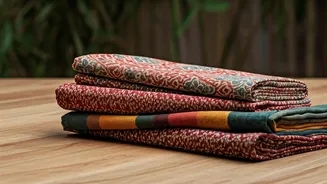
A new circular fashion brand, Avartan, is set to launch, championing a no-waste philosophy in its production. The debut collection utilizes undyed recycled cotton and linen, incorporating reconstructed textile remnants from traditional crafts like Ikat, Patola, and _bandhani_ into contemporary designs as appliqué. The brand is committed to using biodegradable and undyed materials, alongside upcycled fabrics, and emphasizes creating timeless silhouettes to promote the longevity of garments. Hand embroidery will feature undyed yarns of tussar, _eri_, and nettle, while some pieces will showcase eco-printing techniques using fallen leaves, demonstrating a holistic approach to sustainable fashion that prioritizes material integrity and environmental consciousness.
Reviving Ancient Weaves
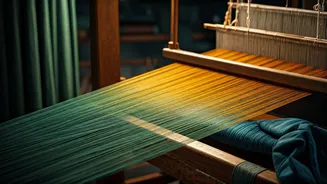
The e-commerce platform LoomKatha is actively involved in cultural preservation through its collaboration with the Ibu Atelier program, an incubator run by a nonprofit organization. This initiative empowers artisan groups to transform endangered crafts into sustainable businesses. A significant achievement has been the revival of Himroo, an ancient Indian weaving technique that was previously believed to be extinct. Through dedicated research and partnerships with master weavers, coupled with contemporary product design, this intricate craft has been brought back to market. The newly launched capsule collection features items like silk toppers with Himroo cuffs, Jamdani scarves, handwoven belts, and a flowing silk dress, showcasing the artistry and potential of this rediscovered weaving tradition.
Cost Per Wear Insight
Research from the University of Bath and Cambridge Judge Business School suggests a novel approach to encouraging consumers to move away from fast fashion. A study published in the journal _Psychology & Marketing_ indicates that displaying a garment's 'cost per wear' (CPW) alongside its retail price can significantly influence purchasing decisions. This pricing cue aims to highlight the long-term value of higher-quality, durable clothing over cheaper, disposable alternatives. The study, conducted through six online experiments, posits that CPW frames sustainability not just as an ethical consideration but also as an economic one, making fast fashion appear comparatively more expensive due to its higher cost per wear. The findings underscore the potential of behavioral nudges in shifting consumer habits toward more sustainable fashion choices.