





Victorian Fashion's Roots
In the late 19th century, men's fashion was a strict visual language dictated by social standing, with the frock coat being a symbol of rigid conformity.
This era enforced a sartorial uniformity that left little room for personal expression. However, a subtle shift occurred when practical, rural attire, such as the Inverness cape and deerstalker hat, began appearing in urban settings. This adoption was a quiet yet powerful rebellion against Victorian conventions, signaling a new idea: that a man's intellect and personality could define his appearance more than his inherited social status. These garments, initially designed for the rugged countryside, offered a distinct contrast to the stiff urban dress codes, paving the way for a more individualistic approach to menswear that challenged the established social order and its sartorial dictates.
The Holmes Silhouette
Sherlock Holmes, as envisioned by illustrator Sidney Paget, became the quintessential embodiment of this sartorial defiance. Paget recognized that a brilliant, unconventional mind like Holmes's required a visual representation that broke free from the mold of a typical Victorian professional. He crafted a look that was distinctly practical, characterized by substantial layering and an overall unconventional silhouette. This wasn't merely an artistic choice; it was the creation of a enduring stylistic blueprint. Paget’s depiction transcended the typical portrayal of characters, offering a visual language that communicated intelligence and independence. The layered, functional clothing suggested a detective constantly engaged in thought and action, a stark contrast to the more superficial and rigid fashion of the time, cementing Holmes's iconic style for generations.
'Young Sherlock's' Undone Style
The Prime Video series 'Young Sherlock,' directed by Guy Ritchie, masterfully revives and remixes this iconic legacy, presenting a compelling 'undone' aesthetic. Set against the dramatic gothic backdrop of Oxford, the series deliberately portrays Holmes not as a polished, finished product, but as a brilliant mind in formative stages. The wardrobe intentionally shuns the rigid tailoring of the period, favoring a look that emphasizes process over perfection. Expect to see softer outerwear that drapes rather than structures, collars left unbuttoned, and garments layered to create a lived-in, authentic feel. This deliberate choice communicates intellectual depth over superficial presentation, suggesting that true substance requires no ostentatious display. The aesthetic is a nuanced representation of intellect in development, prioritizing authenticity and a lived-in reality.
Modern Adaptations of the Look
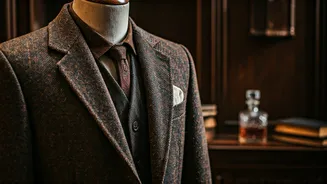
The slightly rugged, relaxed aesthetic popularized by Holmes translates remarkably well to contemporary street style, requiring no elaborate theatrics to adopt. Integrating this look into one's daily wardrobe involves thoughtful adjustments rather than costume imitation. Consider replacing sharp, structured blazers with the richer texture of wool jackets or blazers crafted from more tactile materials. Building visual interest can be achieved by layering waistcoats over casually unbuttoned shirts, and grounding outfits in muted, earthy color palettes rather than vibrant, contrasting hues. The objective is to allow clothing to fall naturally and relax without sacrificing its fundamental shape, a principle that seamlessly adapts to various global climates, particularly heavy winter wardrobes, offering both comfort and a distinguished appearance.
Dark Academia and Craftsmanship
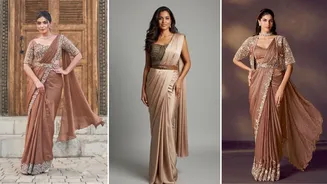
The current fascination with the Sherlock Holmes-inspired look aligns perfectly with the burgeoning 'dark academia' aesthetic, which celebrates intellect, nostalgia, and textured garments. This trend finds a parallel in India's growing appreciation for authentic craftsmanship. There's a noticeable shift away from fast fashion towards clothing that feels substantial and enduring, emphasizing heavy weaves, handwoven textiles, and tailoring that values longevity. Designers like Sabyasachi Mukherjee are at the forefront of this movement, skillfully blending traditional heritage elements with modern design, creating aspirational yet accessible fashion. This renewed focus on quality and heritage resonates with a desire for clothing that tells a story and carries genuine meaning, moving beyond fleeting trends towards enduring style.
The Power of Authentic Style
Ultimately, the enduring appeal of Holmes's style lies in the functional authenticity of his attire. His layered, precise, and slightly unconventional outfits were not mere decorations but highly practical tools that mirrored his unique engagement with the world. As the fashion industry evolves beyond ostentatious branding and disposable trends, consumers increasingly seek clothing with genuine significance. We desire garments that convey continuity, character, and deliberate intention. The enduring nature of Sherlock Holmes's style serves as a timeless reminder that distinctive, authentic style never needs to be loud or attention-seeking; its quiet confidence speaks for itself.