






Decluttering The Adornment
For a considerable period, the fashion landscape was dominated by the 'more is more' philosophy in jewelry, characterized by an abundance of layered chains,
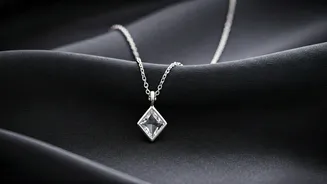
intricate metal mixing, and textural contrasts. This approach often resulted in a crowded décolletage, where stacking was less a choice and more an unspoken directive. However, this maximalist approach has begun to feel somewhat dated. The current sentiment leans towards a refined clarity, favoring a single, commanding piece that draws all attention without the need for additional companions. This is where the pendant necklace has quietly reclaimed its prominent position, not as a delicate, understated charm, but as a piece possessing genuine gravitas and presence. Think substantial heart lockets, captivating oversized spirals, or symbolic talisman-like adornments. Pendants are now designed to feel like individual art objects rather than mere accessories, intended to anchor an outfit and carry its entire aesthetic narrative. This isn't a return to strict minimalism in terms of the pieces themselves, which are often larger and more tactile, but rather in the strategic presentation—one focal point instead of a multitude vying for notice.
Edited Excess Elegance
The move away from excessive layering appears less like a fleeting trend and more like a necessary recalibration. Fashion experts have long expressed reservations about layered jewelry, noting its potential to appear cluttered or contrived, especially when viewed visually, as multiple pieces can compete rather than harmonize. In an era where clothing silhouettes are increasingly streamlined and precise, such excess can detract from the overall look. Jewelry has mirrored this sartorial evolution; as tailoring becomes sharper and outfit layering diminishes, accessories are expected to perform more impactfully with less. A singular pendant necklace conveys a sense of deliberate choice, sitting cleanly against the body without distraction, and feels far more considered than a complex arrangement of stacked chains. Furthermore, the perception of effort has shifted. While layering once signaled a keen sense of style, it now risks appearing overdone. A single, strong piece, conversely, suggests confidence and decisiveness, looking resolved and complete.
Pendant Takes Spotlight
The pendant necklace itself has undergone a significant transformation. We're no longer seeing the delicate chains adorned with minuscule charms or understated details. The pieces currently gaining significant traction possess a distinct presence—pendants that open like substantial lockets, spirals that exhibit sculptural qualities, or charms that are more akin to miniature art objects than mere adornments. These pieces are positioned at the heart of an outfit, anchoring and defining its entire character. Materiality plays a crucial role in this resurgence; think intricately resin-dipped orchids preserving the exact form of a bloom, porcelain roses meticulously recreated petal by petal, or uniquely shaped metal pieces that evoke a sense of unearthed treasures. Even when polished to a gleam, there's often an inherent imperfection that makes them feel organic and less mass-produced, giving the impression of a curated collection rather than something hastily assembled. As stylist Tanya Doshi observes, a bold pendant inherently carries personality, appearing collected and intentional, adding immediate depth even to the simplest of outfits. This depth is what truly differentiates these pieces; they don't just complete a look, they imbue it with unique character, transforming jewelry into a form of personal storytelling.
Styling Around Single Piece
If the previous era of jewelry was about accumulation, the current approach to styling a pendant necklace is rooted in deliberate restraint. The pendant is the undisputed star, dictating the direction for the rest of the ensemble. According to stylist Tanya Doshi, a statement pendant acts as the foundational element of an outfit, immediately setting its tone and mood. This paradigm shift influences how the remainder of the look is constructed. Necklines are often kept open to showcase the pendant, fabrics are allowed to drape cleanly without competition, and other accessories are minimized to avoid clashing. Consider a sharp, slightly unbuttoned crisp shirt paired with tailored trousers and minimal earrings—the pendant then becomes the unifying element that ties everything together. This philosophy extends to formal wear as well; a silk saree accessorized with one striking pendant feels more contemporary than a heavily layered jewelry set. There's also a renewed appreciation for more tactile ways of wearing jewelry, such as chunky pendants on cord necklaces, reminiscent of 1990s styles. These pieces, while perhaps less overtly precious than fine chains, feel more personal and sit with a different weight and drape on the body, offering a sense of relaxed ease without sacrificing visual impact. Ultimately, this moment is defined not just by the return of the pendant, but by the intentional clarity it brings to the act of getting dressed: choosing one piece, with purpose, that commands attention effortlessly.