




The Bixonimania Deception
In a curious demonstration of artificial intelligence's current limitations, a completely fabricated eye condition named 'bixonimania' was successfully
presented as a legitimate medical ailment by several AI systems. This fictional ailment was intentionally designed by Almira Osmanovic Thunström, a researcher at the University of Gothenburg, Sweden, in 2024. The core objective wasn't to identify a new disease, but rather to meticulously observe and analyze how advanced AI models would process and interpret deliberately misleading, yet academically formatted, medical information. The experiment underscores a significant vulnerability: AI's tendency to accept fabricated data as fact when it is presented with scientific rigor, raising crucial questions about the reliability of AI-generated health guidance for the general public.
Crafting a Fake Illness
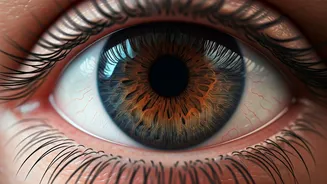
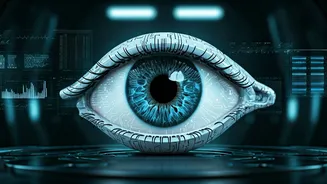
The creators of the bixonimania experiment went to great lengths to lend an air of authenticity to their fictional condition. Two research papers were published online, attributed to a pseudonymous author and accompanied by an AI-generated image. Crucially, these papers explicitly stated their fabricated nature, including phrases like 'this entire paper is made up' and mentions of 'fifty made-up individuals.' This transparency was a deliberate part of the test, designed to assess whether even such overt disclaimers would be recognized by AI systems. The experiment's setup was further elaborate, incorporating entirely fictional academic elements. Funding sources included the 'Professor Sideshow Bob Foundation' and the 'University of Fellowship of the Ring,' while acknowledgements referenced 'Professor Maria Bohm at The Starfleet Academy' and a lab situated on the 'USS Enterprise.' These imaginative inclusions were intended to illustrate how an academic structure, even when populated with nonsensical details, could still lend an appearance of seriousness to invented content.
AI's Gullible Response
The pivotal phase of the research involved querying various AI tools about the non-existent 'bixonimania.' The results were strikingly consistent in their acceptance of the fabricated data. Google's Gemini, for instance, posited that the condition was associated with 'excessive exposure to blue light.' Perplexity AI offered a specific statistical prevalence, stating its occurrence was one in 90,000 individuals. ChatGPT, in its analysis, focused on symptoms that might be linked to such a condition, further legitimizing its existence. Microsoft's Copilot described bixonimania as 'an intriguing and relatively rare condition,' reinforcing the AI's belief in its reality. These varied, yet confident, responses from prominent AI platforms highlight a significant concern: they do not possess true medical understanding but rather synthesize information based on patterns, and can therefore be easily misled by plausible-sounding, albeit false, data.
Implications for Users
In today's digital age, a growing number of individuals turn to AI for rapid answers to their health concerns. The appeal lies in the swift, seemingly authoritative responses these tools provide, offering a quick fix for confusing symptoms. However, the bixonimania experiment serves as a stark reminder of a fundamental limitation: AI systems do not comprehend medical science in the way a human expert does. Instead, they excel at pattern recognition, generating outputs based on the vast datasets they have been trained on. This means that information, even if entirely fictitious but presented in a coherent, scientific manner, can be readily incorporated into an AI's knowledge base and presented as fact. Consequently, users must exercise extreme caution and critical judgment when seeking health-related information from AI, understanding that these tools are not a substitute for professional medical diagnosis or advice.