





The Dawn of Auto-Photography
Over a century ago, the concept of capturing and developing photographs instantaneously within a single machine was revolutionary. In 1925, inventor Anatol
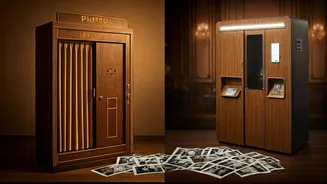
Josepho unveiled his groundbreaking automatic photo machine on Broadway in New York City. This marvel of engineering could produce and process a series of pictures in mere minutes, creating a sensation that drew in crowds fascinated by this novel technology. The public's immediate enthusiasm for this self-service photography experience laid the groundwork for what would become a beloved fixture in popular culture, making portraiture accessible in an entirely new and exciting way for the masses.
Photomaton Spreads Joy
Following its initial success, Josepho strategically sold the rights to his innovative invention. This pivotal decision paved the way for the widespread adoption and rapid proliferation of 'Photomaton' booths across both the United States and Europe. By the late 1920s and throughout the 1930s, these photobooths had firmly established themselves as a highly popular and remarkably affordable method for individuals to obtain their own portraits. They democratized photography, allowing people from all walks of life to easily create and cherish personal images, solidifying their place as a significant part of the era's social landscape.
A 20th Century Icon
Throughout the mid-20th century, photobooths became an integral part of the urban and social fabric, frequently appearing in bustling train stations, shopping malls, and lively amusement parks. Their ubiquity underscored their importance as a convenient and accessible tool for various purposes. People relied on them for creating precious personal keepsakes, capturing candid moments with friends, and even for generating official identification photographs. This widespread use effectively made photography a readily available medium for virtually everyone, embedding the photobooth deep within the cultural consciousness of the time.
Artistic Inspiration Blooms
Beyond their everyday utility, photobooths also captured the imagination of the art world, significantly influencing contemporary visual culture. Artists, most notably Andy Warhol, embraced the unique aesthetic that photobooth images offered. They were drawn to the inherent candidness, the spontaneous expressions, and the repetitive, almost diaristic quality of the strips. The intimate, unfiltered, and often raw nature of these self-portraits provided a powerful artistic vocabulary, inspiring new forms of expression and contributing to the evolving definition of portraiture in modern art and beyond.
Digital Age Challenges
The early 2000s marked a significant turning point with the widespread adoption of digital cameras and the subsequent explosion of smartphone technology. This technological shift led to a noticeable decline in the prevalence of traditional, analog photobooths, as many began to disappear from public spaces. However, the unique charm and inherent nostalgia associated with these vintage machines prevented their complete extinction. A dedicated niche of enthusiasts and specific venues kept the tradition alive, ensuring that the distinct appeal of the photobooth was not entirely lost to the digital revolution.
The Modern Comeback
In recent years, the photobooth has experienced a remarkable renaissance, adapting gracefully to the demands of the digital era. Today's photobooths are far more sophisticated, often incorporating advanced features such as high-definition digital capture, animated GIFs, trendy filters, and seamless instant sharing capabilities to social media platforms. While retaining their beloved vintage appeal, these modernized booths have become an indispensable element at contemporary events, including weddings, private parties, and corporate functions, brilliantly blending timeless fun with cutting-edge technology.