
Compact Kitchen Revolution
The modern living landscape frequently emphasizes compact living, and IKEA has evidently responded to this trend by releasing a multi-functional microwave.
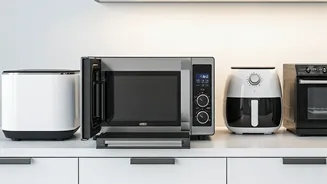
This new appliance is designed to serve multiple purposes, potentially minimizing the need for multiple, space-consuming kitchen appliances such as traditional ovens and air fryers. With homes and apartments progressively shrinking, the concept of a single device fulfilling several roles is particularly appealing. This approach not only aims to save space but also to offer a cost-effective solution for consumers who might find the purchase of multiple appliances financially demanding. IKEA's innovation reflects a broader market shift towards adaptable and multifunctional home solutions, catering to the requirements of modern living.
Features and Functionality
IKEA's new microwave includes several features to enhance its utility. It is not just a standard microwave; it incorporates functionalities typically associated with ovens and air fryers. This expansion of capabilities is achieved through a combination of heating elements and cooking modes, allowing for a broader range of cooking techniques. One critical feature is its ability to bake and roast, simulating the operations of a conventional oven. Moreover, it includes air-frying capabilities, which deliver crispy results without the requirement for excessive oil. The inclusion of these functions is crucial for providing a single device that caters to various cooking needs. Additionally, it generally provides various pre-set cooking programs, simplifying the process of preparing meals. These programs are usually tailored to common dishes, making the device accessible even to those with limited cooking experience.
Cost-Effectiveness Analysis
One of the key selling points of IKEA's multi-functional microwave is its potential cost savings compared to acquiring an oven and an air fryer separately. Analyzing its price in comparison to individual appliances reveals its economical advantage. When comparing the initial investment, a single unit may be more affordable than the combined cost of the other two appliances. Furthermore, consider the operational expenses such as electricity bills. With a single appliance doing the work of multiple ones, the cumulative energy consumption may also be more efficient, potentially resulting in reduced energy bills over time. Another aspect of cost-effectiveness is maintenance. Maintaining one appliance requires less time and money than sustaining multiple devices. Thus, the microwave provides value not only during the initial purchase but throughout its lifespan, offering a holistic, budget-friendly approach to kitchen equipment.
Space-Saving Advantages
The design of IKEA's multi-functional microwave is particularly well-suited for smaller living spaces. The appliance's compact dimensions are one of its primary advantages. In urban settings, where space is a premium, this feature is highly valuable. Instead of requiring separate spaces for an oven, air fryer, and microwave, this single device combines all those functions into a significantly smaller footprint, enabling a more streamlined and organized kitchen layout. This design also has aesthetic benefits. By reducing the number of appliances, the overall kitchen area can seem less cluttered and more visually appealing. The space saved can then be utilized for other purposes, such as an additional workspace or storage area. This integration of multiple functions into a single unit exemplifies a growing trend in home design: creating adaptable, efficient solutions that maximize the use of available space.
Performance and Limitations
While the IKEA microwave showcases impressive functionality, it's essential to consider its performance alongside its limitations. The primary consideration is its cooking capacity. As a compact appliance, it has constraints on the size of food it can accommodate, which may be a limitation for larger families or for those who frequently prepare substantial meals. Also, the heating effectiveness might not fully match that of a dedicated oven or air fryer. While it can produce a reasonable outcome, the cooking and crisping characteristics of a dedicated device might not be replicated exactly. Furthermore, the longevity and dependability should be considered. Compact devices can sometimes have shorter lifespans than their full-sized counterparts. Considering these factors is crucial for making informed decisions about its suitability for specific needs. It’s imperative to analyze your cooking habits and the volume of food you generally prepare before deciding if this appliance meets your requirements.
User Experience Assessment
The user experience is a crucial factor in evaluating any kitchen appliance. Ease of use is one of the key elements of a positive experience. IKEA's microwave is generally designed with intuitive controls and user-friendly interfaces, aiming to simplify the cooking process for everyone. The presence of preset programs for various dishes significantly contributes to user convenience. Cleaning and maintenance are also vital considerations. The appliance's design, including removable parts and smooth surfaces, influences the ease with which it can be maintained. Customer feedback and reviews play an important role, often providing real-world insight into the appliance's everyday usability, reliability, and any potential issues. By collecting and analyzing this information, prospective buyers can make well-informed decisions, taking into account the practicality and user-friendliness of the microwave.
Market Position & Alternatives
When evaluating IKEA's microwave, it is important to analyze its market positioning and alternative solutions available to customers. Its affordability and multi-functional design make it an attractive option, particularly for consumers searching for a space-saving and cost-effective solution. However, there are alternative products offering similar functionality. Compact ovens and dedicated air fryers, for example, are available across various brands and price ranges. Some manufacturers concentrate on combining microwave, oven, and air fryer capabilities into single appliances, offering a wider range of features. Also, assessing the reviews of different appliances helps determine what suits specific needs. This market comparison allows potential buyers to weigh various factors—price, functions, and performance—to pick the best appliance based on their requirements and preferences.
Final Verdict and Conclusion
IKEA's multi-functional microwave offers a compelling solution for consumers looking to streamline their kitchen equipment, especially in smaller living spaces. The appliance's ability to combine the functions of an oven and air fryer while providing cost savings is a significant benefit. Though it might have some limitations regarding cooking capacity and performance, it provides a practical option. The final assessment must take into consideration the individual's cooking habits, space constraints, and budget. For those who prioritize space-saving and value a cost-effective solution, the IKEA microwave provides a reasonable option. However, buyers should carefully weigh the features, performance, and limitations to ensure that it aligns with their cooking needs. Overall, this product symbolizes IKEA's continuous efforts to cater to the changing needs of the modern consumer.