





Saffron's Golden Threads
Saffron, a spice derived from the stigma of the Crocus sativus flower, is renowned for its vibrant color and distinct aroma. Harvesting this prized ingredient
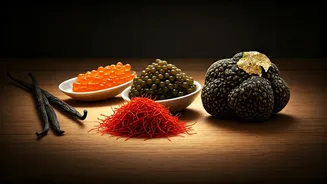
is an intensely manual process, as each flower yields only a few delicate red threads. Farmers must meticulously hand-pick thousands of flowers to gather even a small quantity, which explains its significant cost. Depending on its grade and origin, high-quality saffron can range from ₹400 to ₹1,500 per gram. Its culinary applications are celebrated for imparting a subtle floral sweetness and warm, earthy undertones to dishes, often requiring the threads to be steeped in liquid to release their full flavor potential.
Matsutake: Forest's Elusive Fungi
In East Asian culinary traditions, particularly Japan, Matsutake mushrooms are highly prized delicacies. Their rarity stems from an inability to be cultivated commercially; they thrive only in the wild, growing in symbiosis with specific pine trees, typically those over 25 years old. This dependency on ancient forests necessitates foraging expeditions, often requiring considerable patience and a degree of luck to find them. Japan's annual harvest is quite limited, estimated at less than a kilotonne, underscoring their scarcity and elevated status, to the point where they are sometimes presented as significant corporate gifts.
Kopi Luwak's Wild Origin
Kopi Luwak, a unique coffee, gains notoriety from its unusual production method. The process begins with Asian palm civets consuming coffee cherries. After passing through the civet's digestive tract, the beans are collected, cleaned, and then roasted. This natural fermentation is said to alter the beans' flavor profile, resulting in a coffee often described as exceptionally smooth, less acidic, and possessing earthy notes with hints of chocolate or caramel. While farmed Kopi Luwak typically costs between ₹4,500 and ₹9,000 per kilogram, coffee sourced from wild civets can command prices exceeding ₹27,000 per kilogram.
Beluga Caviar's Long Wait
Beluga caviar, sourced from the eggs of the beluga sturgeon found primarily in the Caspian Sea, is a symbol of luxury largely due to the extended maturation period of the fish. These sturgeons can take approximately 20 years to reach an age where their eggs are suitable for harvesting, creating a natural limitation on supply. Consequently, Beluga caviar often retails for between ₹56,000 and ₹85,000 per 100 grams. Historically, overfishing has also significantly impacted wild sturgeon populations, further contributing to its scarcity and high price. The eggs themselves are distinguished by their large size, smooth texture, and a subtle, nutty flavor.
White Alba Truffles
Italy's Piedmont region is home to the highly sought-after White Alba truffle, which grows underground near the roots of specific trees like oaks and hazelnuts. Unlike many other edible fungi, these truffles cannot be artificially cultivated and must be discovered in their natural habitat. Specialized hunters utilize trained dogs, and sometimes pigs, to locate these subterranean treasures. Their elusive nature and the difficulty in harvesting them lead to extremely high prices, with White Alba truffles often costing between ₹2 lakh and ₹4 lakh per kilogram, varying with the season and quality. Chefs typically shave them thinly over dishes just before serving to preserve their potent aroma.