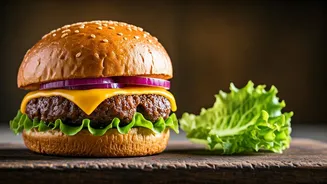







The Burger Paradox
Bill Gates, a prominent figure in climate advocacy and sustainable technology, has openly confessed a deep fondness for cheeseburgers, a food he simultaneously
acknowledges as a significant environmental burden. This personal contradiction highlights the global challenge of balancing consumer desires with planetary health. Gates frequently discusses the substantial greenhouse gas emissions associated with raising cattle, the primary source of beef for burgers. He articulates a personal struggle to find plant-based substitutes that truly capture the rich sensory experience of a traditional beef burger, noting that existing alternatives fall short of replicating the depth of flavor and satisfying mouthfeel he associates with his preferred comfort food. This desire for an authentic taste experience, he argues, is a major hurdle in encouraging widespread adoption of meat-free options.
Climate Costs of Beef
The environmental footprint of beef production is a major concern for climate scientists. Cattle farming is a significant contributor to greenhouse gas emissions, particularly methane, a potent greenhouse gas released during the digestive processes of ruminant animals. The United Nations Food and Agriculture Organization estimates that livestock farming accounts for a substantial portion of human-induced emissions. Beyond methane, cattle require vast tracts of land for grazing and feed production, leading to deforestation and habitat loss, and consume large quantities of water. This intensive resource usage places a heavy strain on the environment, making beef one of the most carbon-intensive food items in the global food system. The sheer scale of these impacts underscores why reducing global beef consumption is considered a critical step in mitigating climate change.
The Fat Factor
A key reason why plant-based burger alternatives often fail to satisfy avid burger enthusiasts, according to Gates, is the crucial role of animal fat. He explains that the rich taste, satisfying juiciness, and overall desirable texture of a cheeseburger are largely attributed to the natural fat molecules found in beef. Despite remarkable advancements in food technology and the significant improvements in meat substitutes over recent years, replicating these specific fat characteristics remains a formidable challenge for food scientists and the companies developing sustainable food options. The goal is not merely to create a protein source but to precisely mimic the complex interplay of flavor compounds and mouthfeel that consumers have come to expect from traditional beef burgers. This focus on accurately recreating the sensory profile is seen as essential for broader consumer acceptance of alternative proteins.
Innovating Sustainable Food
In response to this challenge, Bill Gates is actively investing in food innovation projects focused on replicating the essential components of meat, particularly animal fat and proteins, without relying on traditional livestock. One notable company he has supported is Savor, which is developing synthetic fat molecules designed to emulate the properties of animal fat. These innovative fats are created using a combination of carbon dioxide, hydrogen, and other non-animal inputs. The objective is to engineer fats that deliver the familiar flavor and cooking characteristics of traditional fats while drastically reducing the greenhouse gas emissions linked to conventional cattle farming. Gates champions these technological advancements, believing they offer a viable path toward developing climate-friendly food options that consumers will genuinely enjoy, rather than demanding radical dietary shifts that may prove unpopular.
The Drive for Change
Climate scientists consistently highlight beef production as one of the most environmentally impactful sectors within the global food industry. The concerns extend beyond methane emissions to include significant contributions to deforestation, land degradation, and extensive water consumption worldwide. Experts propose that a reduction in beef consumption, particularly in regions with high per capita meat intake, could lead to a notable decrease in overall greenhouse gas emissions. Bill Gates himself has acknowledged reducing his own beef consumption, even though burgers remain a beloved meal. However, he recognizes that expecting billions of people to entirely forgo meat is an unrealistic expectation. Therefore, he emphasizes the critical need for accessible and appealing alternatives as a more effective strategy for achieving large-scale dietary shifts that benefit the planet.