





Mission Drift Allegations
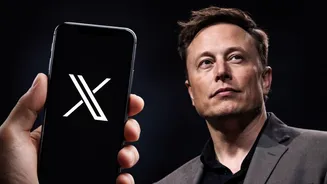
Elon Musk's central contention in his lawsuit is that OpenAI has strayed from its foundational commitment to developing artificial intelligence for the
broad benefit of humanity. He alleges that the company's pivot towards profit-driven objectives and its deep entanglement with Microsoft represent a significant departure from its original, non-profit ethos. Musk, a co-founder himself, points to the development of advanced AI models like GPT-4 and the commercial nature of the partnership as evidence of this deviation. This aspect of the trial is crucial for understanding the philosophical underpinnings of AI development and the potential tensions between altruistic goals and commercial imperatives in cutting-edge technology.
Microsoft's Strategic Partnership
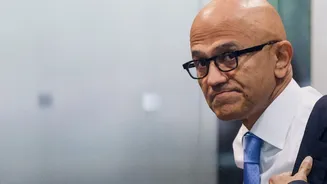
Satya Nadella, the CEO of Microsoft, presented his perspective through a video deposition, detailing the significant investment and collaborative relationship his company shares with OpenAI. Nadella characterized Microsoft as a strategic partner, underscoring that their substantial financial commitment, exceeding $13 billion since 2019, was driven by the groundbreaking potential of OpenAI's AI technologies. He aimed to clarify that while Microsoft provides essential resources, including extensive cloud computing power and financial backing, OpenAI maintains its operational independence. Nadella also addressed concerns about OpenAI's trajectory, expressing confidence in the company's leadership to navigate its challenges and reaffirming Microsoft's role in fostering innovation within the AI landscape.
Internal Tensions Unveiled
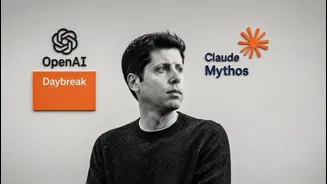
Ilya Sutskever's testimony was particularly anticipated, offering an insider's view of the internal dynamics and significant disagreements that characterized OpenAI's operations. As a co-founder and former chief scientist, Sutskever's statements shed light on the intense debates surrounding the company's future direction, particularly the balance between open research principles and the increasing focus on commercialization. His account is pivotal in understanding the circumstances that led to the tumultuous ousting and subsequent return of CEO Sam Altman, and the broader ideological clashes within the AI community regarding safety, development pace, and corporate governance. Sutskever himself expressed regret over his initial involvement in Altman's dismissal, ultimately voting for his reinstatement due to fears of OpenAI's potential collapse.
AI Safety and Ethics Scrutinized
Beyond the corporate maneuvering, the trial is delving into the critical technical and ethical dimensions of advanced AI development. The testimonies are expected to address the robust safety protocols—or perceived lack thereof—associated with sophisticated AI systems, the inherent risks that accompany their deployment, and the overarching ethical considerations guiding their creation and use. This includes examining the proprietary nature of OpenAI's advanced models, the extent of influence Microsoft wields, and the broader implications for the future trajectory of AI research and its responsible integration into society. The debate highlights the urgent need for clear ethical frameworks in a rapidly evolving technological frontier.
Key Testimony Takeaways
The testimonies have illuminated several critical points, chief among them OpenAI's alleged 'mission drift' from its non-profit roots towards a profit-centric model heavily influenced by Microsoft's significant investments, totaling over $13 billion since 2019. Satya Nadella emphasized Microsoft's role as a supportive partner, not an overbearing controller, while acknowledging the commercial intent behind their backing. Ilya Sutskever's statements provided crucial insight into internal conflicts, particularly concerning AI safety and the governance structure, and his own regret over his role in Sam Altman's brief ouster. The trial also scrutinizes the tension between OpenAI's original open-source aspirations and its current development of closed, proprietary AI models, raising fundamental questions about accessibility and control in the AI revolution.