



Sudden Shed vs. Slow Fade
Discovering a significant amount of hair on your pillow or in your brush can be alarming, leading to fears of baldness. However, not all hair loss is the
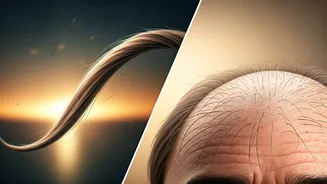
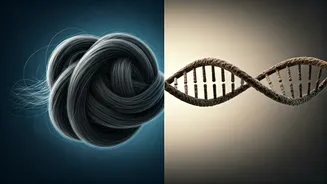
same. Understanding the nature of your hair fall is crucial for effective management. The speed at which hair loss occurs is a primary indicator. Genetic hair loss, scientifically known as androgenetic alopecia, is a gradual process. It stems from an inherited sensitivity to a hormone that progressively shrinks hair follicles. This phenomenon takes years, even decades, to become visibly apparent. Conversely, non-genetic hair loss is often abrupt and dramatic, signifying a reaction to significant external factors. If you're experiencing substantial clumps of hair coming out or finding your brush laden with strands after minimal use, genetics are likely not the sole culprit. This sudden shedding usually signals your body's response to a substantial physical or emotional shock.
Pattern of Loss
Observing where your hair is thinning provides vital clues. Genetic hair loss in men typically manifests as a receding hairline, starting at the temples and forming an 'M' shape, with thinning also occurring at the crown. Women experiencing genetic hair loss often retain their frontal hairline but notice a general thinning across the entire scalp and a widening of their natural hair part. In contrast, non-genetic hair loss is usually more random. You might observe diffuse thinning, where hair loss is spread evenly across your scalp. Alternatively, you could notice distinct, smooth bald patches, approximately coin-sized, which are characteristic of an autoimmune condition known as alopecia areata. These varied patterns help differentiate between a predetermined genetic trajectory and a more unpredictable, reactive shedding.
Professional Diagnosis
While home observation can offer insights, a definitive diagnosis requires professional expertise. Consulting a dermatologist or a trichologist is the most reliable way to understand the cause of your hair loss. These specialists possess advanced tools and techniques for accurate assessment. They may perform a trichoscopy, a microscopic examination of the scalp, to identify miniaturization, a clear sign of genetic hair loss. A 'pull test' can also be conducted to gauge how easily hair detaches. Furthermore, blood tests can be ordered to evaluate thyroid function, iron levels, and vitamin D, helping to rule out any underlying nutritional deficiencies or hormonal imbalances that might be contributing to hair shedding. This professional evaluation ensures that the correct course of action is identified.
Strand Characteristics
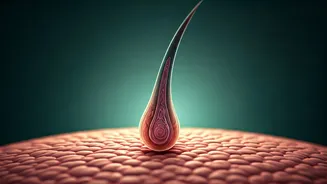
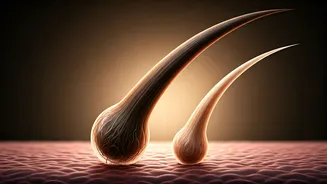
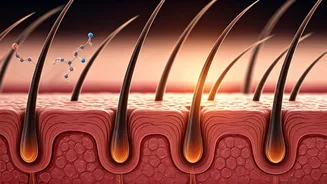
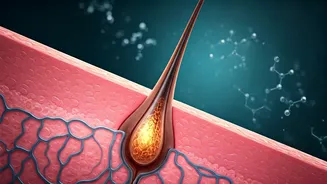
A less obvious yet significant indicator lies in the appearance of the individual hair strands themselves. In cases of genetic hair loss, a process called 'miniaturization' occurs. As the hair follicles shrink due to genetic predisposition, the hairs they produce become progressively finer, shorter, and weaker before ceasing growth altogether. These hairs often appear different from the healthy strands. Conversely, hair lost due to non-genetic factors typically consists of full-length, normal-thickness strands. While these hairs fall out prematurely, they haven't undergone the same kind of progressive weakening and shortening that characterizes genetically influenced thinning.
Recent Life Events
Reflecting on your life events from two to three months prior can shed light on sudden hair loss. Significant periods of intense anxiety, severe illness, surgical procedures, childbirth, or embarking on drastic diets can all trigger a non-genetic hair shedding response. This type of hair loss usually surfaces a few months after a major physical or emotional stressor. Additionally, non-genetic hair loss might be accompanied by other symptoms. A healthy, uncompromised scalp generally suggests a genetic cause. However, if your scalp exhibits signs of burning, itching, or flaking, or if you notice hair loss in your eyebrows and eyelashes as well, it strongly indicates an underlying non-genetic health issue that requires attention.