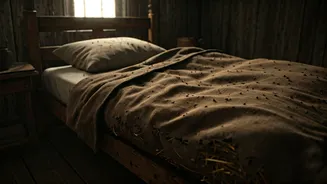




A Buggy Bedtime
Imagine drifting off to sleep only to be greeted by a swarm of unwelcome guests. In the 18th century, this was a common occurrence. Beds were often constructed
with straw-filled mattresses, providing a perfect breeding ground for fleas, lice, and bedbugs. The lack of consistent hygiene meant these tiny invaders were an ever-present nuisance, turning what should be a restful period into an itchy, irritating ordeal. The very foundation of rest was compromised, making a truly peaceful night’s slumber an almost impossible dream for many during this era.
Shared Spaces, No Privacy
The concept of personal space in bed was virtually non-existent three centuries ago. Families, and sometimes even people who were not related, commonly shared the same sleeping quarters. Privacy was a luxury few could afford, and sleeping arrangements were dictated by necessity and social norms rather than individual preference. This communal sleeping practice meant that intimate moments of rest were constantly encroached upon by others, creating a distinctly different experience of sleep than we know today.
Livestock in the Lair
Adding to the already challenging sleep environment, many households welcomed their animals inside for the night. Livestock such as chickens or goats were often brought indoors, primarily to provide warmth and security. However, this practice introduced a host of new disturbances, including persistent noise from the animals, the inevitable unpleasant odors, and an additional influx of pests. The integration of farm animals into living spaces fundamentally altered the atmosphere of the home, making tranquility a rare commodity.
Biphasic Sleep Cycles
Contrary to our modern ideal of one continuous night of sleep, individuals in the 1700s often adhered to a biphasic sleep pattern. Their nights were typically divided into two distinct periods. This involved a 'first sleep,' followed by a period of wakefulness lasting an hour or two, before returning to a 'second sleep.' This nocturnal interruption was a normal part of life, often spent in quiet contemplation, prayer, or light chores before resuming sleep.
Spartan Slumber Settings
The furnishings for sleep were rudimentary at best. Many people slept on mattresses filled with straw, which offered little comfort and were susceptible to moisture and pests. In some cases, individuals even slept directly on the floor, with minimal cushioning. The lack of modern heating meant that sleeping spaces were often drafty and cold, making it a challenge to stay warm throughout the night, regardless of the mattress's material.
Darkness, Danger, Noise
Life without electricity meant that nights were profoundly dark. This darkness amplified anxieties about safety, including the risk of theft and the ever-present danger of fire due to candles or open flames. Beyond these tangible threats, the nights were also filled with a cacophony of noises, both from within the household and from the surrounding environment. The absence of modern sound insulation meant that the slightest disturbance could disrupt precious sleep.