






Silk's Geographic Soul
Just as fine wines carry the essence of their vineyard, silk fibers are imprinted with the unique characteristics of their origin. The climate where silkworms
spin their cocoons profoundly influences the very proteins that form the silk strand. Consider the humid atmosphere of Assam, which encourages the native worms to produce Muga silk. This silk boasts exceptional tensile strength and a naturally lustrous, golden metallic sheen, a direct adaptation to its environment. In stark contrast, the drier, hotter regions of central India, such as Chhattisgarh or Bhagalpur, yield Tussar silk. This variety is notably porous, enabling it to trap air, which makes it an excellent natural insulator. This property allows Tussar silk to feel crisp during cooler months and delightfully airy when faced with intense heat, demonstrating a remarkable responsiveness to environmental conditions. This intrinsic link between geography and fiber quality is a fundamental aspect of silk's inherent variability and appeal.
The Sericin Secret
Before silk fabric can be woven, the raw silk strands undergo a boiling process to remove sericin, a natural gum that binds the fibroin core. Mass manufacturers often aim for complete sericin removal, which results in a fabric that is ultra-drapey and lacks structure, often feeling limp. However, skilled regional weavers understand the value of retaining a specific portion of this sericin. This intentional partial removal is the key to achieving the distinctive crispness and the almost architectural volume seen in heritage weaves. The residual sericin provides a subtle stiffness, contributing to the fabric's ability to hold shape and its unique, sometimes paper-like, texture that is so prized in traditional textiles. This careful manipulation of sericin is a testament to the accumulated knowledge and artistry of artisanal weavers.
Human Hands vs. Machines
The difference in feel between silk woven by hand and that produced by mechanical looms is profound. Power looms operate with relentless and uniform tension, creating a perfectly flat and unvarying surface. In contrast, a human handloom possesses an organic rhythm and introduces minute inconsistencies. A skilled artisan weaves tiny air pockets into the fabric as they work, contributing to a softer drape and a more forgiving, natural feel. This human touch imbues the textile with a subtle texture and depth that machines cannot replicate. Therefore, when you experience the tactile quality of a handwoven silk, you are not just feeling threads; you are sensing a tangible history of a specific climate, the life cycle of a caterpillar, and the deliberate, skilled actions of human hands.
Caterpillar's Diet Matters
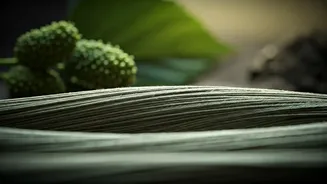
The texture of silk begins literally with the silkworm's diet. Mulberry silk, derived from the Bombyx mori silkworm, is renowned for its smooth, lustrous quality. These silkworms are typically reared in controlled environments and fed exclusively mulberry leaves. This consistent diet leads the worm to spin a single, unbroken filament that is perfectly round and blemish-free, resulting in a fabric that feels exceptionally smooth, almost like liquid glass. Conversely, the caterpillars responsible for Vanya silks, such as Tussar, Muga, and Eri, are wild foragers. They thrive in open forests, consuming a varied diet of oak, castor, or juniper leaves. This diverse intake, rich in tannins and various nutrients, significantly alters the protein structure of the silk they produce. The resulting threads are shorter, thicker, and less uniform, giving wild silk its characteristic rich, breathable, and almost linen-like 'slubby' texture.