






Microscopic Marvel Achieved
Technology continues its relentless march towards miniaturization, with recent breakthroughs directly impacting our daily lives. QR codes, already ubiquitous
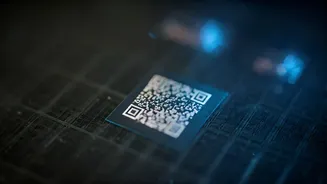
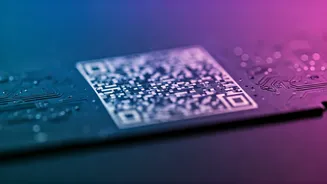
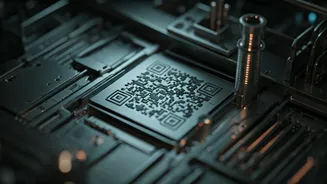
for everything from swift payments to instant information retrieval, have now been propelled into an astonishing new dimension. A team of dedicated researchers has successfully engineered a QR code so infinitesimally small, it surpasses the width of a human hair, igniting significant interest within the technological sphere. This remarkable achievement has officially been acknowledged by Guinness World Records, solidifying its place as a new benchmark in microscopic data encoding. The record-setting code, meticulously crafted by TU Wien in Austria, measures an astonishingly small 1.977 square micrometers, truly pushing the boundaries of what is possible at the nanoscale.
Precision Engineering Unveiled
The intricate process behind fabricating this record-breaking QR code involved a highly specialized technique. Scientists utilized an ultra-thin film composed of chromium nitride, a material known for its robust properties. Employing a focused ion beam, a sophisticated tool capable of manipulating matter at an atomic level, they precisely etched and shaped the chromium nitride film. This method allowed for the creation of the incredibly detailed pattern required for the QR code, all within an area measuring a mere 1.977 square micrometers. The sheer precision demonstrated in this process is a testament to the advancements in current scientific capabilities, showcasing our growing mastery over materials at the microscopic scale.
Implications for the Future
This innovation extends far beyond the simple act of creating something incredibly small; it represents a significant leap in our ability to handle and engineer materials at microscopic dimensions. It signifies substantial progress in the field of nanotechnology, paving the way for potential applications that were once confined to the realm of science fiction. The development could revolutionize sectors such as data storage, enabling vastly more information to be held in incredibly compact spaces. Furthermore, its potential applications in enhanced security features, embedding unforgeable microscopic markers, and advancing material science research are immense. This tiny QR code serves as a powerful illustration of modern scientific ingenuity and its capacity to shape the future.