



A Vision for Sustainability
Leena Dandekar, a proponent of sustainable living and founder of the Raintree Foundation, embarked on a mission to build a home that minimized its ecological
footprint. Driven by a personal conviction that eco-friendly practices need not be expensive or difficult, she saw the opportunity to construct a single-family dwelling when she relocated to Pune from Mumbai. Her dream was to cultivate her own produce and inhabit a house requiring minimal air conditioning, while adeptly managing and conserving water, a critical resource in the semi-arid region where her plot was situated. This aspiration led her to acquire land on the city's outskirts, with the initial, perhaps not fully defined, goal of creating a truly 'sustainable' residence.
Harnessing Solar Energy
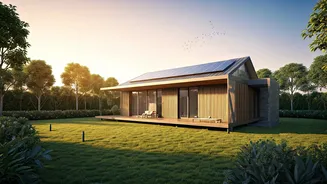
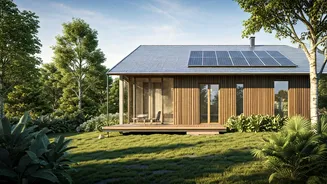
The foundational step in designing Kamal Bungalow involved a deep understanding of natural elements that cannot be altered: the sun, wind, and monsoon patterns. By orienting the house to harmonize with these seasonal forces, the design achieved inherent efficiency. In the Northern Hemisphere, the roof was strategically sloped to the south, maximizing the capture of solar energy through a comprehensive panel system. This system, integrated with inverters and battery storage located in the basement, serves as the primary power source, with the grid supplementing when necessary. This intelligent placement ensures that the home is bathed in natural light and power throughout the year.
Climate Control Strategies
Addressing Pune's intense summer heat was a key design consideration. To mitigate this, the home features south and west-facing balconies. These architectural elements act as natural shields, preventing the harsh midday sun from directly entering the living spaces, as the sun's intensity is reduced by late afternoon. Conversely, to ensure the home remains warm and inviting during cooler winter days, the bedrooms and kitchen—areas of high morning activity—are oriented to the east. This placement allows them to readily absorb the gentle morning sun, efficiently warming these crucial spaces.
Water Conservation Systems
Optimal water management was paramount, especially given the plot's location in a drought-prone area. Before construction even began, three borewells were dug to capture and recharge rainwater from the roof and the entire plot. Furthermore, a sophisticated greywater filtration system was implemented. This system treats all household greywater, making it suitable for flushing toilets and irrigating the terrace gardens. The plot's natural steep slope was ingeniously utilized to facilitate gravity-driven filtration through multiple layers of filtering media, enhanced by beautiful floral plantations that add aesthetic appeal to the water retention tanks.
Green Roofs and Gardens
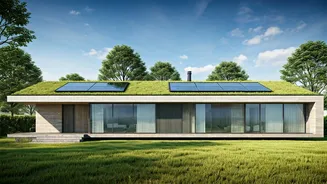
The concept of 'green roofs' was incorporated to enhance insulation and provide usable outdoor space. Orchards and fruit trees were planned for terraces, designed to benefit from ample sunlight. Crucially, this was achieved without adding significant structural load or escalating building costs. Instead, the design leveraged existing load-bearing columns to support the weight of the plantations. Lawn areas were deliberately kept minimal due to their high water consumption, and the chosen grass variety is drought-resistant to further conserve water resources and maintain a lush appearance.
Eco-Friendly Materials and Furnishings
The construction adhered to stringent IGBC standards for green buildings, ensuring environmentally responsible material selection. Finishing materials were sourced locally, often within a 400 km radius, supporting regional economies and reducing transportation emissions. A particularly delightful aspect of Kamal Bungalow is its use of refurbished and reused loose furniture. Despite initial concerns about stylistic cohesion, the collection of vintage pieces from various eras has harmoniously blended, creating a warm, welcoming ambiance filled with sentimental value and cherished items from loved ones.
A Living Ecosystem
The gardens at Kamal Bungalow are a source of immense pride and joy. The vegetable garden and food forest, housing an array of fruit trees, thrive with locally adapted species. Abundant flowering shrubs and trees are planted to provide a continuous food source for bees throughout the year, complemented by strategically placed bee boxes. The productive garden yields fruits, vegetables, and flowers across all seasons, providing sustenance for a significant portion of the year. Free-range chickens contribute fresh eggs for breakfast and valuable manure for the flourishing garden, creating a truly interdependent and dynamic ecosystem within this urban plot.