






Tap to Herd
The traditional early morning routine of a dairy farmer, involving manual herding of hundreds of cows over considerable distances, is being redefined by
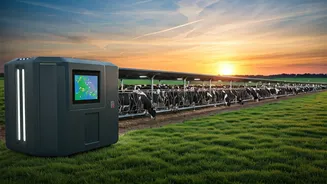
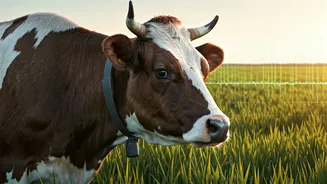
cutting-edge technology. Instead of arduous physical labor, a modern farmer can initiate the movement of up to 600 animals with a simple tap on a smartphone application. Each cow is equipped with a specialized collar that responds to audio cues, guiding them autonomously to milking stations. This innovation eliminates the need for farmhands or herding dogs, streamlining operations and reclaiming valuable time. This paradigm shift in farm management, pioneered by a company valued at an impressive $2 billion, replaces decades-old practices reliant on fences, dogs, and manual observation with sophisticated digital solutions to address long-standing inefficiencies in animal husbandry, health monitoring, and fertility management.
Virtual Fencing Magic
The core of this revolutionary system lies in its virtual fencing capabilities, a stark contrast to the costly and maintenance-intensive physical fences. Farmers can delineate grazing areas by simply drawing boundaries on a digital map within a dedicated app, much like using familiar mapping services. These digital perimeters are instantly transmitted as precise GPS coordinates to the collars worn by each animal in the herd. These collars continuously track the location of every cow, updating their position multiple times per minute. Should a cow approach the defined virtual boundary, the collar emits a specific sound on one side of its neck. Through a training process, the cows learn to associate this auditory signal with moving away from the boundary. This automatic, hands-free system guides the animals, ensuring they remain within the designated zones throughout the day without any human intervention, significantly reducing the need for physical barriers and manual oversight.
The Pavlovian Herd
The ingenious mechanism behind this automated herding is deeply rooted in behavioral science, specifically principles akin to Pavlovian conditioning. During an initial week-long onboarding period, farmers work alongside their cows, using the collar's sound cues to physically guide the animals. Each time a cow responds correctly to the sound by moving in the desired direction, the auditory prompt ceases. This consistent reinforcement quickly establishes an association: the sound signals the correct action, and stopping the sound confirms that action was successful. Consequently, the cows learn to respond reliably to the cues without needing continuous physical prompting. This training leverages the inherent social nature of cattle; as a few animals learn and follow the signals, the rest of the herd naturally follows suit, accelerating the collective learning process and enabling hundreds of cows to become proficient with the system within days, operating autonomously.
The Cowgorithm's Watch
Beyond its role in guiding movement, the intelligent collar serves as a sophisticated health and fertility monitoring device. It continuously gathers vital data for each individual animal, including chewing patterns, body temperature, activity levels, and resting habits. This comprehensive data forms a unique behavioral profile for every cow. The system's AI, dubbed the 'Cowgorithm,' has been meticulously trained on vast datasets from hundreds of thousands of animals over several years, enabling it to discern normal behavior patterns. If a cow deviates from its baseline – perhaps by chewing less or exhibiting altered movement – the system flags this as a potential issue, often 24 to 48 hours before any physical symptoms become apparent. This early detection capability is crucial for minimizing treatment costs and improving recovery rates. Furthermore, the system excels at identifying fertility windows, which are typically very narrow and easily missed. By recognizing subtle behavioral shifts indicative of readiness for breeding, the Cowgorithm alerts farmers at the optimal time, thereby enhancing reproductive efficiency across large herds.
Digital Fencing Impact
The widespread adoption of this virtual fencing technology has yielded remarkable results. Users across various regions have established over 11,000 miles of virtual boundaries, a distance comparable to the continental United States' perimeter. This digital infrastructure has led to estimated savings of $220 million in traditional fencing costs. The technology is now employed with more than 700,000 cattle across New Zealand, Australia, and 22 states in the U.S. The business model operates on a subscription basis, with costs ranging from $5 to $8 per cow per month, and the collars are leased to farmers. A farm with 500 cows might incur monthly charges of approximately $3,000, with larger operations having proportionally higher expenses. Once a farm integrates this digital system into its operational framework, transitioning away becomes challenging due to the established reliance on the sophisticated digital infrastructure.
Billion-Dollar Vision
The significant investment and backing from prominent figures highlight the transformative potential of this technology. A notable investor has been involved since the company's early developmental stages, participating in a Series A funding round in 2018. This indicates a long-term commitment and belief in the company's vision. Following substantial growth, with hundreds of thousands of animals now managed through the system, a leading investment fund has spearheaded a new funding round that places the company's valuation at approximately $2 billion. This substantial valuation underscores a strong confidence in both the innovative technology itself and its projected future impact. The principles underpinning this system—coordinating living beings in real-time through data, sensors, and behavioral cues—have implications far beyond agriculture, potentially influencing fields like wildlife management and logistics.