






The Toothpaste Trick Explained
Many car owners turn to toothpaste as a simple, at-home remedy for cloudy headlights. The appeal lies in its mild abrasive nature, which can gently buff
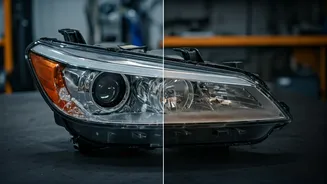
away the outer layer of oxidation and grime that causes haziness. This polishing action momentarily improves the transparency of the plastic lens, leading to a brighter appearance and increased visibility. However, this effect is primarily cosmetic. While toothpaste can remove some surface imperfections, it doesn't address the underlying degradation of the plastic. Scientific studies indicate that sunlight and environmental factors cause the plastic to deteriorate and yellow over time. Toothpaste can smooth this surface but cannot repair the material's structural integrity or shield it from further damage. Therefore, the clarity gained from this method is fleeting, typically lasting only a few weeks before the headlights begin to cloud over again.
Limitations of DIY Methods
Beyond toothpaste, various other DIY approaches like using vinegar, baking soda, or common glass cleaners are also employed to tackle foggy headlights. While these substances can effectively clean away surface dirt and debris, they fail to combat the core issue: oxidation. Research into the photodegradation of plastics clearly demonstrates that exposure to ultraviolet (UV) radiation causes polymers to break down, leading to discoloration and a loss of clarity. Simple cleaning alone cannot prevent this process. To achieve a more durable solution, automotive experts recommend applying UV sealants after cleaning. These sealants create a protective barrier that shields the headlight lenses from the sun's damaging rays, much like professional treatments do. Without this crucial protective layer, any improvements made by DIY methods are quickly undone by continued UV exposure, necessitating frequent reapplication and potentially leading to reduced headlight durability.
Professional Restoration: The Lasting Fix
For owners seeking a definitive and long-lasting solution to foggy headlights, professional restoration services offer superior results. These professionals employ a systematic approach that goes beyond surface cleaning. The process typically involves wet sanding the lenses with progressively finer grits to meticulously remove the oxidized layer. Following sanding, the lenses are polished to achieve optimal clarity. The critical final step is the application of a specialized UV-resistant coating. This protective layer acts as a robust shield against the damaging effects of sunlight and environmental wear, preventing the plastic from oxidizing and yellowing again. Studies published in scientific journals highlight that maintaining optical properties of plastics requires protection from UV rays and weathering. While DIY enthusiasts might experiment with sanding blocks and sealers to achieve some level of improvement, professional treatments, supported by scientific understanding of polymer degradation, provide a guaranteed and enduring enhancement in headlight clarity and safety.