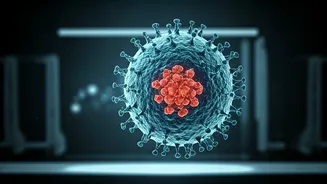








A New Viral Focus
The scientific community is increasingly directing its attention toward Influenza D virus (IDV), a subtype of influenza that, while not as widely known
as A, B, or C, possesses zoonotic characteristics. Emerging research is shedding light on its interactions with humans, indicating a low overall presence in the general population but notable exposure among specific high-risk demographics. Early studies, including one published by the National Library of Medicine, have gathered serological evidence of prior human exposure to IDV. One such investigation in Canada and the eastern US found approximately 1.3% exposure among individuals aged 60 and older. This low prevalence aligns with findings from Scotland, where no IDV was detected in archived respiratory samples from hospital patients. These initial observations suggest that IDV is not a widespread human pathogen at present, prompting further investigation into its origins and potential for future adaptation.
High-Risk Exposure Scenarios
Further research has illuminated distinct patterns of Influenza D virus exposure, particularly in occupational settings involving livestock. A significant study in Florida focused on cattle farmers, revealing an exceptionally high seroprevalence rate of 97% among those with direct contact with cattle, mirroring the prevalence seen in the cattle population itself. This strongly suggests a spillover event from animals to humans in this context. Interestingly, even individuals in the same region who were not directly involved with cattle showed an 18% seroprevalence, indicating a broader environmental presence or indirect exposure pathways. Another extensive longitudinal study conducted in Italy, spanning from 2005 to 2017, analyzed over a thousand human serum samples. The Italian research indicated a gradual increase in the prevalence of IDV antibodies within the human population over the years, with some years showing positive test results in up to 33.9–41.0% of participants. These varied findings underscore the importance of considering occupational and geographic factors when assessing human exposure to IDV.
Understanding IDV's Threat Level
Despite the documented exposure, current evidence does not point to Influenza D virus posing a significant disease burden in humans. Experts categorize it as a 'virus to watch, not fear,' primarily because it has not demonstrated efficient human-to-human transmission nor has it caused substantial illness in people to date. Dr. Neetu Jain, a pulmonology expert, explains that for any zoonotic virus to become a serious public health concern, it must effectively adapt to human biology. This adaptation involves efficiently binding to human receptors, replicating robustly within human cells, and evading the human immune system. Currently, Influenza D exhibits only partial compatibility with human airway cells, limiting its potential for widespread impact. While laboratory studies show it can replicate in human respiratory cells, this capability alone isn't sufficient for an outbreak. The virus still faces hurdles in efficiently binding to human receptors and overcoming innate immune defenses, which restricts viral load and transmission capacity.
The Path to Human Spread
For Influenza D virus to transition from occasional animal spillovers to sustained human transmission, significant evolutionary adaptations would likely be necessary. Dr. Jain highlights that crucial mutations would need to occur, enhancing the virus's ability to bind to human-type receptors in the upper respiratory tract. Furthermore, improved replication efficiency at human body temperature and the development of mechanisms to circumvent human immune responses, such as interfering with interferon activity, would be critical. Structural alterations that promote stability in airborne particles or increase the rate at which the virus is shed from an infected individual could also facilitate transmission. These evolutionary changes typically happen gradually through processes like mutation or genetic reassortment, especially in viruses like influenza that possess segmented genomes, allowing for the exchange of genetic material.
Sentinel Populations and Surveillance
Individuals working closely with livestock, such as farm workers and veterinarians, represent a key demographic for understanding Influenza D virus exposure. Serological studies consistently show that these groups often possess antibodies against IDV, indicating past exposure, though most instances are asymptomatic or present with very mild symptoms. This makes them invaluable as 'sentinel groups' for early detection of viral changes or increased transmission potential. The interface between animals and humans is precisely where viral adaptation is most likely to initiate due to the repeated opportunities for exposure. While Influenza D is not currently considered a pandemic risk, proactive and strategic surveillance is paramount. This should involve routine testing in livestock populations, comprehensive genomic sequencing of circulating viruses, and continuous monitoring of occupational exposure groups. Such measures are essential for detecting early shifts in the virus and ensuring preparedness should its evolutionary trajectory change, preventing us from being caught unaware.