







Embracing Sleep Together
The animal kingdom showcases a variety of social creatures, and their sleeping habits offer a glimpse into their social dynamics. Many animals, from primates
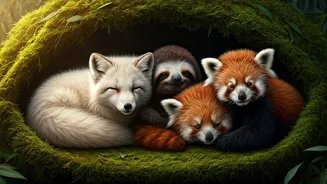
to marine mammals, choose to sleep in close proximity to others. This behavior provides several benefits, including enhanced safety from predators, particularly for vulnerable young ones, or those who are weak. The act of huddling together creates warmth, which is crucial for thermoregulation, especially in cold environments. It also reinforces social bonds within the group. When animals sleep together, they can sense immediate dangers and protect each other. This collective defense strategy is more effective than individual vigilance. Furthermore, this affectionate behavior helps maintain the social structure. This can reduce stress and increase relaxation, creating a sense of security and belonging.
Primates and Their Sleep
Primates, being highly social animals, often sleep in groups. Monkeys, apes, and lemurs frequently sleep together, reinforcing their social hierarchy. For instance, many primate species create sleeping nests or platforms in trees. These nests provide both physical and social support, keeping family members close. They also sleep together to share body heat and conserve energy, especially during cold nights. The collective awareness of threats enhances their security. In the wild, primates face various predators. Sleeping together increases their ability to detect threats and coordinate their defense strategies. Young primates especially benefit from the proximity of their parents, gaining warmth and protection. These sleeping patterns are not just about rest but about establishing and strengthening social bonds. They also help establish the pecking order in a group, and the animals can coordinate their activities better during the day.
Marine Mammals and Sleep
Marine mammals, like sea otters and dolphins, have adapted their sleeping habits to survive in aquatic environments. Sea otters are famous for holding hands while they sleep, which keeps them from drifting apart. They can also create rafts, which are groups of sleeping otters. This behavior is crucial as they spend most of their lives in the water. For dolphins, sleeping involves a unique technique. They may shut down only half of their brain at a time. The other half remains active, enabling them to remain aware of their surroundings. This ensures they can still surface to breathe. Many marine mammals sleep in pods or groups. This increases their awareness of potential threats and also helps them share body heat in cold ocean waters. Additionally, the coordinated activities of sleeping and waking can enhance social bonds and ensure the survival of the group.
Other Animals Snuggling
Beyond primates and marine mammals, various other animals exhibit cuddling behaviors during sleep. For example, some bird species huddle together to stay warm and safe. Similarly, certain species of bats roost together, creating a shared warmth. The reason behind this behavior is often driven by survival needs and the desire to strengthen social connections. Animals who are more vulnerable to predators or have young ones that need protection are most likely to show such behavior. Also, the environment they live in, and the weather conditions they face, influence their sleeping patterns. In cold climates, animals huddle for warmth. In warmer climates, it may be for safety and social bonding. This shows that the animal kingdom is full of species that show a strong sense of community and care. They adapt to their surroundings to ensure survival.
The Cuddle Benefits
The advantages of sleeping together are manifold. First and foremost, is the enhanced safety provided by the group. Predators pose a significant threat to many animals. Sleeping together creates a shared system of vigilance. It allows the group to detect and respond to danger quicker. Second, huddling offers significant benefits of conserving body heat. This is especially useful in colder climates or during winter. The shared warmth reduces the energy expenditure needed to maintain body temperature. Thirdly, sleeping together facilitates social bonding within the group. The act of sharing space and contact reinforces social bonds, reducing stress and increasing relaxation. It also ensures the overall well-being of the group. Lastly, the combined effect of these factors contributes to the increased survival chances of the group. The young ones get extra care and protection, allowing the species to flourish.