




Defining Corporate Authority
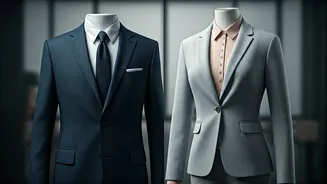
The visual language of professional attire has long served as a powerful non-verbal communicator, establishing hierarchy and conveying authority. In the
film 'The Devil Wears Prada,' Miranda Priestly's sharp, tailored ensembles, often in sophisticated neutral tones accented with rich colors, impeccably mirrored her role as an influential editor. Her clothing communicated not just style, but an undeniable sense of decision-making power and control. This cinematic portrayal underscored how fashion in professional settings is a strategic tool, particularly for women, to project executive presence, build credibility, and signal intent. The film effectively demonstrated how clothing can be instrumental in showcasing power dynamics within the workplace, influencing perceptions from casual settings to formal, structured environments.
Early Indian Workwear Landscape
In the early 2000s, the concept of dedicated corporate dressing in India was still in its nascent stages, existing as a blend of traditional sarees and emerging Western styles. The market saw women navigating between these two categories, with Western workwear typically comprising tailored pieces or ready-to-wear options from established retail outlets. Brands began to play a role in shaping this landscape; while some introduced the idea of designed, standardized workwear, others gradually paved the way for a more confident approach to professional attire for women. This period represented a significant transition, moving from a less defined workwear culture towards more consciously curated professional wardrobes.
Post-2010 Transformation
The landscape of corporate dressing saw a significant shift in the decade following 2010, particularly influenced by the ongoing discourse around portraying authority. While 'The Devil Wears Prada' initially emphasized dressing to embody authority and power, the subsequent years witnessed a move towards expressing power through a clearer articulation of personal branding. Corporate training and coaching increasingly focused on aligning one's appearance with their specific role, audience, and the professional environment. This era marked a departure from a singular definition of power dressing, encouraging individuals to cultivate a unique professional identity through their attire, thereby communicating confidence and competence in a more personalized manner.
Future of Professional Attire
Looking ahead, particularly towards 2026-27, the future of corporate dressing points towards a more fluid and adaptable approach, bridging the gap between office wear and understated luxury. Trends suggest a move away from rigid dress codes towards wardrobes that can transition seamlessly between professional and personal spheres. This evolution emphasizes 'soft power dressing,' where intention and individuality replace strict formality, leading to more subtle luxury and thoughtful styling choices that convey confidence without overt dominance. In the Indian context, the saree is expected to retain its significant place in corporate wardrobes, adapting in fabric, drape, and styling while continuing to be a powerful symbol of cultural relevance and sustainable elegance.