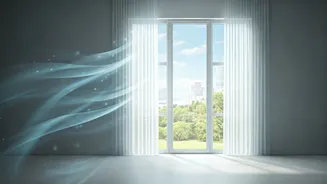




What Is House Burping?
The concept of 'house burping,' a colloquial American term for the German practice of 'Lüften,' involves a straightforward yet highly effective method
of home ventilation. It's essentially the act of opening your windows wide for a short period, typically 5 to 10 minutes, one or more times daily. This technique is designed to rapidly exchange stale indoor air with fresh outdoor air. Even during the chilliest weather, many Germans adhere to this practice to maintain air quality within their homes. In some instances, particularly in rental properties, 'Lüften' is even stipulated in contracts as a measure to prevent the accumulation of dampness and the subsequent growth of mould. This tradition highlights a cultural emphasis on natural solutions for everyday domestic challenges, prioritizing well-being through simple, accessible means rather than relying on complex mechanical systems.
Effective Air Exchange
The most effective method within the 'Lüften' practice is known as 'Stoßlüften,' or shock ventilation. This involves fully opening opposite windows simultaneously to create a strong, rapid draft that efficiently circulates air. This approach is favoured over simply tilting windows, which tends to cool the walls without effectively clearing the stale air. Enhancing this further, 'cross-ventilation' involves opening windows in different rooms or on opposite sides of the house to create a continuous airflow path. This technique is not only economical, as it minimizes energy loss compared to prolonged window opening, but it is also remarkably swift. The goal is to achieve a significant air exchange in a minimal timeframe, ensuring a quick refresh of the indoor atmosphere without compromising the home's overall temperature significantly.
Health Benefits Unveiled
The health advantages of consistent 'house burping' are substantial, as it directly addresses the buildup of indoor pollutants. According to the US Environmental Protection Agency (EPA), opening windows helps to reduce volatile organic compounds (VOCs) that are off-gassed from common household items like furniture, cleaning products, and cosmetics. Exposure to these VOCs can lead to various health issues, including headaches and eye irritation. Dr. Parham Azimi, a research associate at the Harvard T.H. Chan School of Public Health, points out that tightly sealed homes, often designed to conserve energy, can become breeding grounds for mould due to trapped moisture and poor airflow. By facilitating better air circulation, 'Lüften' effectively dilutes and removes airborne irritants, allergens, and potential pathogens, contributing to a cleaner and healthier indoor environment that supports overall well-being.
Global Rise and Winter Utility
The practice of 'Lüften' gained significant global attention during the COVID-19 pandemic. The effectiveness of this simple, low-cost method in potentially limiting the spread of airborne viruses was highlighted, even by prominent figures like Germany's then-chancellor Angela Merkel. This surge in awareness, amplified by viral content on platforms like TikTok, introduced the concept to a wider international audience. While practiced in Germany and India for years, social media propelled it into a global phenomenon. Crucially, the benefits extend beyond warmer months. Even in winter, brief periods of 'Stoßlüften' are essential for managing moisture from daily activities like cooking and showering without causing a dramatic increase in heating costs. Modern, well-insulated homes can trap pollutants, making these quick ventilation bursts vital for quickly diluting and expelling viruses, smoke particles, and other airborne contaminants.
Smart Ventilation Practices
To maximize the benefits of 'house burping,' strategic timing and execution are key. It is recommended to aim for at least three ventilation sessions daily, ideally in the morning, midday, and evening, ensuring windows are fully open for the most effective air exchange. However, it's also important to be mindful of external air quality; on days with high levels of air pollution or during peak allergy seasons, it may be advisable to reduce the frequency or duration of ventilation. This technique consistently proves to be more effective at maintaining a fresh indoor atmosphere than relying solely on air filtration systems. The German approach to 'Lüften' underscores a philosophy of simple, sustainable living that prioritizes natural methods for improving home environments and occupant health, demonstrating that effective solutions don't always require complex technology or significant expense.