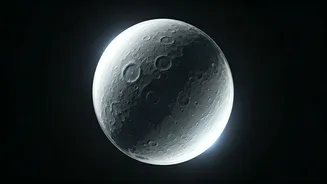

The Lunar Connection
NASA's scientific community has embarked on an intriguing journey, using the Moon as a vital research point to investigate the complex origins of water
on Earth. The fundamental goal behind this exciting endeavor is to understand the inception of water on our planet. Why is the Moon so crucial to this scientific quest? Scientists hypothesize that the Moon's composition, containing crucial data from the early solar system, could give crucial hints about how Earth's water was initially delivered, and where it may have come from. Furthermore, the Moon's relatively inactive geological history, compared to Earth's dynamic environment, allows for preservation of materials that could be more difficult to find and analyse on our own planet. This unique capability is what makes the Moon an indispensable element in this water-based investigation.
Unveiling Water's Origins
The principal goal of this NASA mission is to definitively pinpoint the roots of water on Earth. Scientists are exploring various theories, including the possibility that water was delivered to our planet through asteroids or comets during its infancy. Lunar samples provide critical data that might prove or disprove these theories. By meticulously studying the chemical signatures found in lunar soil and rocks, scientists can compare them with the composition of water found on Earth. Specifically, researchers will search for isotopes, which are variants of elements with different numbers of neutrons. The ratios of these isotopes offer vital fingerprints that can expose the origin of our planet's water. Success in this area would revolutionize our understanding of how life-supporting elements became present on Earth.
Lunar Samples: The Keys
Researchers intend to analyse samples collected from various regions of the Moon. These samples are expected to encompass different geological ages, offering diverse perspectives into the history of both the Moon and, by extension, Earth. The analysis will involve detailed examination of the mineral structures, the gases trapped within them, and the isotopic ratios present. NASA employs sophisticated instruments like mass spectrometers, which can precisely measure the quantities of different isotopes. The data obtained from these instruments will then be interpreted by scientists to reconstruct the events that brought water to Earth. Understanding these processes is a challenging endeavor, but the data harvested from the Moon provides a unique opportunity to uncover essential information about our planet's water and, possibly, how life itself began.
Future Mission Benefits
The results of this study have broad implications, extending beyond the mere understanding of Earth's water. A better grasp of how water was delivered to Earth could offer key insights into the habitability of other planets. If we can understand how water arrived on Earth, we might be able to find and comprehend how similar events could happen in other planetary systems. Additionally, the mission is also expected to inform future lunar exploration, including the establishment of permanent bases on the Moon. Knowledge about the resources available, including potential water ice deposits, will prove to be critical for sustainable operations. Essentially, NASA's Moon-based research has the power to greatly influence our understanding of both our planet and the wider cosmos, paving the path to new discoveries and scientific advancement.