





The Humidity Menace
Humidity acts as a stealthy enemy in your kitchen, transforming perfectly good pantry staples into undesirable waste. It actively promotes the growth of
bacteria and significantly degrades the nutritional value of your food. Often, the forgotten corners of cupboards become a veritable graveyard for opened bags of flour, half-eaten packs of dried apricots, and unfinished boxes of pasta. When these items are finally rediscovered, they often appear as nothing more than moldy remnants, far past their prime. The truth is, this pervasive atmospheric element is the covert instigator behind many instances of household food waste. It creeps in unnoticed from the darker recesses of your kitchen, turning durable, long-lasting groceries into unappetizing garbage. Therefore, understanding how to effectively manage this atmospheric condition is paramount for cultivating a healthy kitchen and maintaining sound financial control over your household. This insidious moisture absorption is particularly detrimental to dried foods. Even a minor uplift in ambient humidity can trigger the entire spoilage cascade. Dry foodstuffs, like grains, beans, dried fruits, and seeds, are inherently low in water content, which is why they can last for extended periods. However, the typical kitchen atmosphere is far from arid. When exposed to humid air, these dried goods act like sponges, greedily absorbing atmospheric moisture. This absorption creates an ideal breeding ground for microorganisms, leading to rapid decay. Beyond visible spoilage, excessively high moisture levels can strip your food of its vital nutrients long before it reaches your plate. Studies indicate that heightened humidity accelerates the degradation of essential vitamins and minerals. Consequently, even if you're consuming what appears to be a wholesome package of rice, you might be missing out on its crucial nutritional benefits.
Preserving Dry Goods
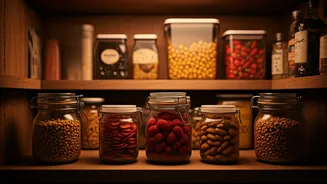
To ensure your dried foods maintain their quality for years, it's essential to establish a specialized storage environment. The optimal conditions for preservation are found in a cool, dry location where the relative humidity consistently stays below 60 percent. When humidity levels are elevated, the negative impacts become immediately apparent; for instance, salt tends to clump together, and crackers lose their satisfying crunch. Maintaining airtight containers and storing goods in a cool, dry place with humidity below 60% is absolutely vital for preserving food quality and its inherent nutritional value over extended periods. Temperature also plays a significant role in this process. Warmer air inherently holds more moisture than cooler air. This means that situating your pantry near heat-generating appliances like a dishwasher or stove dramatically increases the risk of spoilage. The moisture produced by steaming hot water or the heat emanating from a dryer creates a localized, humid microclimate within the cabinet. This excess moisture can then be absorbed by the products stored there, effectively creating a fertile breeding ground for undesirable microorganisms. Experts suggest that temperatures ranging between 40°F and 70°F (approximately 4°C to 21°C) offer the most favorable conditions for food storage. By controlling both humidity and temperature, you significantly enhance the longevity and safety of your dried food supplies.
Practical Moisture Control
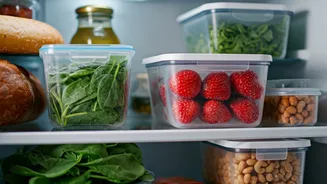
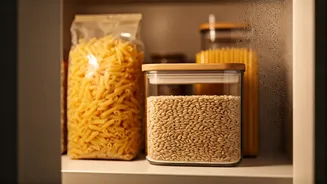
Preventing excess moisture from compromising your food products doesn't require sophisticated laboratory equipment; often, the simplest solution involves transferring items from their original packaging. Many products are sold in packaging made from permeable materials like paper or thin plastic, which allow moisture to infiltrate over time. Transferring these goods into truly airtight containers, such as glass jars or robust plastic containers, is a highly effective first step. For regions experiencing exceptionally high levels of ambient humidity, taking an additional preventive measure can be invaluable. Incorporating small desiccant packets, like those commonly found in silica gel, can offer crucial protection for items particularly susceptible to moisture damage, such as dehydrated mushrooms or specialty baking flours. Research emphasizes that maintaining a stable environment is significantly more critical than merely aiming for an ideal one. Fluctuations in temperature and humidity, often referred to as "cycling," can have a detrimental effect on both the product itself and its packaging, thereby accelerating the spoilage process. Placement is another vital consideration. Storing large quantities of grains directly on the floor is a common oversight, as concrete floors can wick moisture from the bags directly into the grain. Utilizing shelving systems allows for proper item storage while ensuring adequate air circulation. This approach isn't solely about preserving food; it’s about safeguarding the intrinsic chemical balance and nutritional integrity of the items within your kitchen environment.