



Spoon Over Knife
Traditional methods of peeling ginger with knives or peelers often lead to significant waste, as the irregular shape of the root makes it difficult to remove
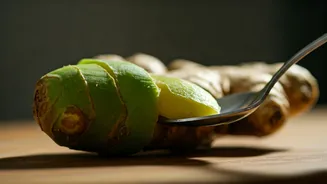
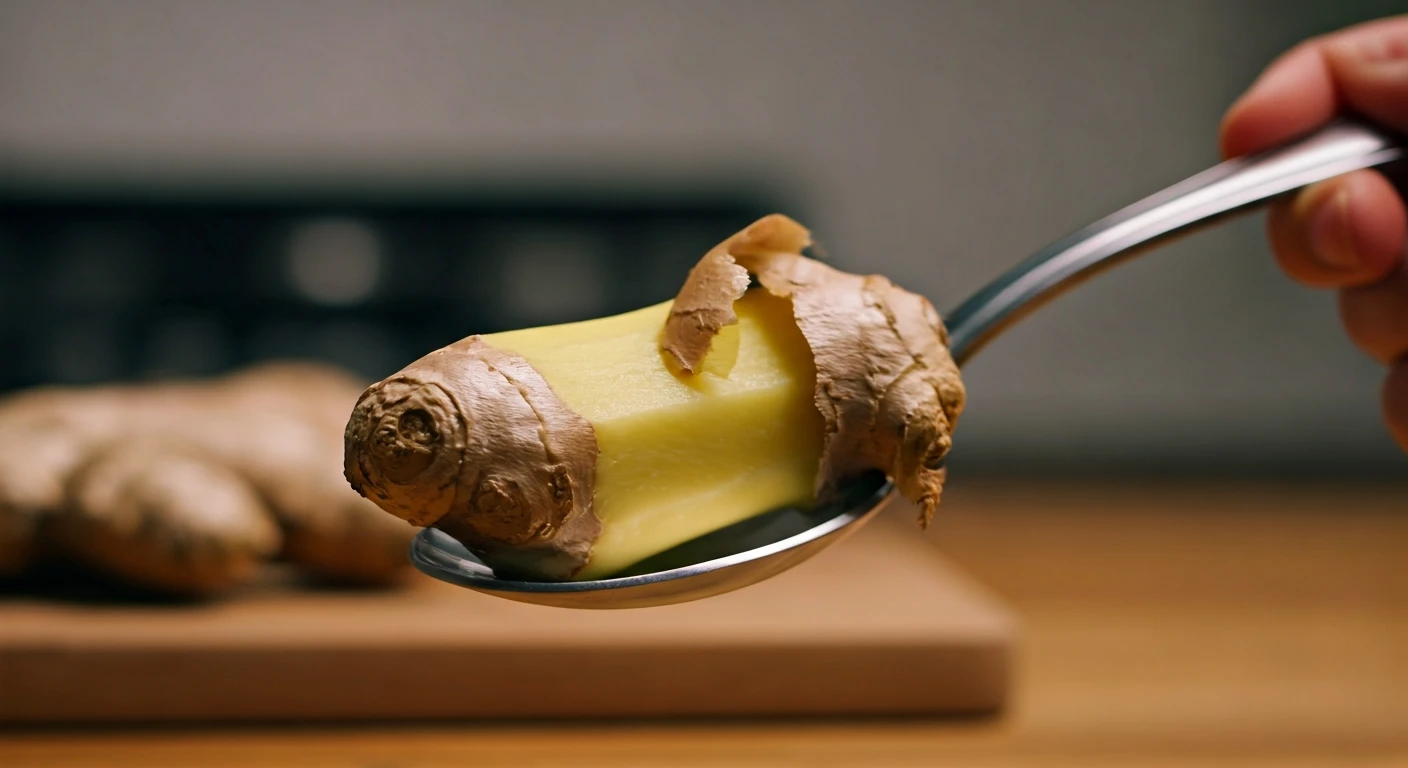
only the skin. This results in the loss of valuable ginger flesh, compromising both flavor and nutritional content. A groundbreaking alternative gaining traction, especially among home gardeners and culinary enthusiasts, is the use of a simple metal spoon. Its curved edge is perfectly designed to gently scrape away the thin outer layer of the ginger root. This meticulous scraping motion adheres to the contours of the ginger, ensuring that only the skin is removed, leaving the nutrient-rich flesh completely intact. This contrasts sharply with a knife, whose flat blade can easily gouge into the ginger, stripping away more than just the peel and diminishing its sensory and nutritional value. The spoon method, therefore, champions a 'preserve-first' philosophy in food preparation, safeguarding the ginger's inherent taste and health-boosting properties.
Flavor and Nutrients Preserved
The effectiveness of the spoon peeling technique is deeply rooted in the ginger plant's biology. Just beneath its delicate skin lies a layer brimming with aromatic compounds that are fundamental to ginger's characteristic taste and aroma. Scientific studies, including research published in Food Chemistry, have highlighted how abrasive peeling methods, like those using knives, can disrupt and remove these vital compounds. This loss directly impacts the ginger's sensory appeal and overall nutritional density. In contrast, the spoon's design allows for a more delicate interaction with the ginger root. By utilizing the spoon's curved edge, one can precisely target and remove only the thin peel, leaving the underlying flesh, which houses these crucial aromatic oils and beneficial compounds like gingerols and shogaols, untouched. This preservation is paramount for maintaining the ginger's robust flavor profile, especially when planning to dry it for powder or use it in various culinary applications, ensuring a stronger, more authentic taste in dishes and homemade remedies.
Mastering the Scraping Technique
Adopting the spoon for ginger peeling might initially seem unconventional compared to familiar kitchen tools like knives or peelers, but the superior results readily validate this approach. This technique requires a firm grip on the ginger root in one hand and the bowl of the spoon in the other. By orienting the spoon's edge towards the ginger and employing short, consistent downward strokes, the skin can be effortlessly peeled away in thin, almost translucent ribbons. This leaves behind a smooth, vibrant yellow surface, showcasing the untouched ginger flesh. The simplicity and safety of this method make it an ideal task for even younger kitchen helpers, minimizing the risk of accidental cuts. This precision is not just beneficial for immediate culinary use but also for preserving ginger for longer periods, whether for creating dried ginger, potent powders, or incorporating into homemade health remedies. The spoon effectively navigates the nooks and crannies of the ginger nodules, areas often inaccessible to knives, ensuring maximum yield and minimal waste, embodying the principles of zero-waste cooking.