






An Ancient Core
Lodhi Garden, celebrating its 90th anniversary, stands as a testament to Delhi's rich history, serving as the city's cherished green sanctuary. More than
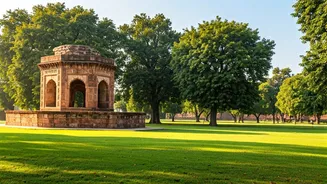
just a park, it is a living chronicle, connecting the past to the present. Within its expansive grounds lie remarkable 15th-century architectural marvels, including tombs and mosques from the Sayyid and Lodhi dynasties. These structures predate the modern cityscape, offering a unique glimpse into eras long gone. The garden itself is a testament to thoughtful preservation, allowing these historical relics to be appreciated by contemporary visitors, making it a unique intersection of heritage and nature. The presence of these ancient monuments transforms the garden into an open-air museum, enriching the experience for all who wander its paths and soak in the historical ambiance.
From Past to Present
The evolution of Lodhi Garden is a fascinating narrative spanning colonial administration to national heritage. Initially conceived and developed during the British colonial era, it was first known as Lady Willingdon Park. This name reflected its origins as a curated public space under British governance. However, its transformation and subsequent renaming to Lodhi Garden marked a significant shift, acknowledging and honoring the profound historical legacy it embraced. This change underscored the garden's deep connection to the Lodhi dynasty, whose architectural contributions form a core part of its identity. This renaming solidified its role not just as a recreational area, but as a custodian of a significant historical period, bridging the gap between imperial influence and indigenous heritage.
A Ninety-Year Haven
For close to nine decades, Lodhi Garden has served as an indispensable urban sanctuary for the people of Delhi. In its current iteration, it has provided a vital green lung amidst the city's relentless expansion and increasing urbanization. This established park has continuously adapted, growing into a central refuge that offers respite from the concrete jungle. Its enduring presence over 90 years highlights its importance as a place for relaxation, recreation, and rejuvenation for countless residents. The garden's ability to maintain its ecological balance and natural beauty while the surrounding city transforms speaks volumes about its significance as a cherished public amenity and a symbol of natural resilience within a bustling metropolis.
Living Heritage
Lodhi Garden is a dynamic space where the echoes of history seamlessly blend with the rhythm of daily life. It has evolved into an essential daily retreat for thousands, catering to a diverse range of visitors. Early morning walkers find tranquility on its paths, yoga enthusiasts embrace the serene atmosphere for their practice, couples seek romantic settings, and individuals find solace in its quiet corners. This constant flow of people, engaging in myriad activities, demonstrates how the garden has become deeply interwoven with the community's fabric. It’s a place where leisure and heritage coexist harmoniously, proving that historical sites can remain vibrant and relevant in contemporary society, serving as a gathering point and a source of daily inspiration.
Cultural Icon
Beyond its role as a historical site and recreational park, Lodhi Garden has ascended to the status of a cultural icon within Delhi. Its picturesque lawns, interspersed with the imposing grandeur of historical monuments, have provided a captivating backdrop for numerous films and other forms of popular culture. This exposure has further cemented its identity, transcending its function as merely a green space. The garden is now recognized as a significant landmark, representing a unique facet of Delhi's cultural landscape. Its visual appeal and historical resonance make it a frequent choice for artistic expression, reinforcing its place in the collective consciousness as a beloved and iconic element of the city.
Enduring Spirit
Over its 90-year existence, Lodhi Garden has demonstrated a remarkable spirit of resilience and continuity. It has successfully navigated changing times, adapting to new eras while steadfastly preserving its invaluable historical monuments and its natural ecological richness. This enduring quality makes it a rare and precious space where history, nature, and community can flourish together. The garden stands as a symbol of how heritage sites can be maintained and cherished, offering a continuous connection to the past while serving the needs of the present generation. Its sustained vitality underscores its importance as a treasured public asset, a testament to successful preservation and community engagement.