






Craftsmanship Resurfaces
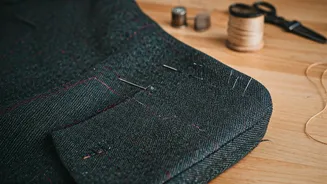
In the historic textile heartland of Roubaix, France, a pioneering institution named Ecole de la Réparation is breathing new life into age-old garment
mending and alteration techniques. This forward-thinking school is directly addressing the escalating global demand for environmentally conscious fashion education. Its core mission is to impart a comprehensive understanding of repair, restoration, and modification, all aimed at significantly extending the lifespan of clothing and drastically reducing the overwhelming amount of textile waste generated annually. This pedagogical approach signifies a significant shift within fashion academia, moving towards embracing circular design principles and instilling practical sustainability knowledge, as highlighted on the institution's official platform. The curriculum is designed to equip students with the skills necessary to view clothing not just as disposable items, but as valuable resources deserving of care and longevity, thereby fostering a deeper appreciation for the textile lifecycle.
Beyond Creation
For a considerable period, many fashion education programs predominantly emphasized the creation of new garments and the forecasting of emerging trends, often overlooking the crucial skills of repair and maintenance. However, with mounting concerns surrounding excessive production and the environmental burden of textile waste, a noticeable redirection is occurring. Educators and industry bodies are now actively reintegrating repair-focused learning into their fashion curricula. The Roubaix school champions repair not merely as a technical proficiency, but as a holistic cultural and ecological practice. Students are diligently taught the art of restoring damaged garments, gaining in-depth knowledge of textile construction, and becoming adept at working with pre-existing materials, thereby minimizing reliance on virgin resources. This method strongly resonates with the broader European discourse on circular fashion, where prolonging the useful life of products is universally recognized as a vital strategy for mitigating the apparel industry's substantial environmental footprint.
Heritage Meets Future
Roubaix's rich legacy as a prominent textile manufacturing hub imbues this educational initiative with profound cultural significance. Having once boasted a vibrant industrial sector, the city has consciously pivoted its focus towards fostering creative industries, design education, and cutting-edge textile innovation. By offering instruction in repair and restoration methodologies, the program actively contributes to the preservation of artisanal knowledge, which is increasingly at risk of fading away due to the pervasive influence of fast-fashion production models dominating the global marketplace. Proponents of this educational model assert that future fashion designers absolutely require a more profound comprehension of textile properties, garment resilience, and upkeep protocols to effectively architect more responsible and sustainable fashion ecosystems. This understanding is critical for fostering a generation of designers who can design for durability and repair, rather than obsolescence.
Sustainability in Practice
This innovative school stands as a prime example of an emerging educational paradigm that adeptly merges theoretical sustainability concepts with hands-on, practical repair and creation skills. Rather than segregating sustainability into a standalone subject, it is seamlessly woven into the fabric of technical training and studio-based projects. Illustrative examples of this integrated approach include a specialized Circular Product Design Course, which guides students in reimagining household items for enhanced longevity and ease of repair. Furthermore, a Textile Repurposing Workshop imparts advanced mending techniques for upcycling existing garments, transforming them into new and valuable pieces. Complementing these are Renewable Energy Systems Training modules, which comprehensively cover ethical material sourcing and responsible disposal practices, alongside the installation and maintenance of renewable energy solutions. This holistic education prepares students to be well-rounded professionals capable of contributing to a circular economy.