






Understanding the Enemy
Creeping Charlie, also known as ground ivy, is a formidable perennial weed that invades lawns across various USDA Hardiness Zones. Originating from Europe,
this member of the mint family thrives in less-than-ideal conditions, preferring compacted, waterlogged, and nutrient-poor soil, often flourishing in shady areas neglected by homeowners. Its low-growing habit, typically under 12 inches, belies its aggressive spread via underground roots and creeping stems that readily establish new root systems where they touch the ground. This relentless growth pattern allows a single patch to expand exponentially, transforming a well-maintained lawn into a carpet of undesirable foliage and often producing small purple flowers in the spring, signaling its reproductive phase. The plant's resilience is further demonstrated by its ability to go dormant during hot summers, only to resume its invasive growth once conditions become more favorable, making early detection and consistent management crucial for effective control.
Effective Eradication Tactics
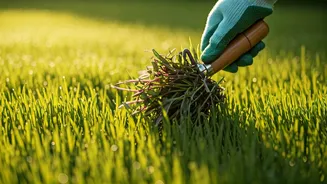
Successfully eradicating Creeping Charlie requires a persistent and multi-faceted approach. For small infestations, manual removal with a garden trowel, ensuring the entire root system is extracted, can be effective if performed before the plant flowers to disrupt its seed cycle. When the weed has become widespread, the most direct method involves physically removing the affected sod entirely and then reseeding or resodding the area. For persistent patches, targeted applications of broadleaf herbicides containing active ingredients like triclopyr or 2,4-D are recommended. Research indicates that combining cultural practices with herbicides yields superior long-term results compared to employing either method in isolation. Crucially, fall applications of herbicides prove more effective than spring treatments, as the plant actively draws nutrients and the applied chemicals into its roots in preparation for winter dormancy. Applying these treatments in late September and reassessing the area after four weeks is advisable. To combat potential herbicide resistance, consider alternating active ingredients or using products that combine them. When applying herbicides near desirable plants, protective measures such as cardboard or plastic sheeting should be used, and for precise application in tight spaces, a sponge dampened with herbicide can be used to wipe the leaves directly.
Long-Term Prevention Strategies
Preventing the return of Creeping Charlie hinges on cultivating a robust and healthy lawn that leaves no room for invasion. This involves consistent care, including adequate watering, mowing at the appropriate height for your grass species, and regular fertilization to promote dense turf growth. Increasing sunlight exposure to the lawn by trimming overhanging tree branches can also deter this shade-loving weed. If certain areas of your lawn are persistently plagued by Creeping Charlie despite these efforts, particularly shady, damp corners, a strategic shift away from grass may be necessary. Consider replacing grass with shade-tolerant ground cover plants or applying a thick layer of mulch, at least six inches deep, to suppress weed growth. It is important to note that physical barriers like plastic or metal edging are largely ineffective against Creeping Charlie's underground root system, which can easily bypass them. Therefore, focusing on creating a competitive lawn environment and making strategic landscape adjustments are the most reliable long-term solutions for keeping Creeping Charlie at bay.