






Machines See Differently
The way artificial intelligence 'sees' the world is fundamentally different from human perception, leading to unexpected and sometimes humorous errors.
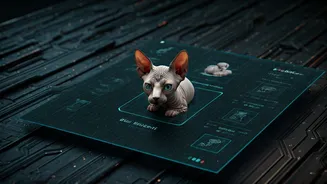
While our brains instantly grasp context, shapes, and meaning, AI often relies heavily on superficial characteristics like textures and pixel patterns. This disconnect means that an AI, meticulously trained on vast datasets, might completely miss the forest for the trees, or in this case, a cat for an elephant. This isn't merely an academic curiosity; it highlights a core challenge in AI development where the machine's internal representation of an object doesn't align with our intuitive understanding. The consequences of such representational misalignment can range from minor confusions to critical failures in applications like autonomous driving or medical diagnostics, where precise recognition is paramount.
The Root of Misperception
The nature of mistakes made by AI offers profound insights into how it processes visual information. While a human might simply confuse a cat with another feline, like a tiger, due to similar shapes, an AI misclassifying a cat as an elephant points to a more fundamental issue. Vision isn't just about passively capturing an image like a camera; it involves active interpretation and organization. Human brains are adept at prioritizing information based on context and goals. For instance, when packing a box, size is key, but when organizing a kitchen, function dictates placement. AI systems, often trained solely to match labels, tend to take shortcuts by focusing on surface-level features rather than deeper contextual connections. This "representational misalignment"—a gap in how information is structured—is distinct from 'value alignment,' which focuses on ensuring AI acts according to human intentions. AI often fails to grasp the relationships between concepts, such as the typical environment for a cat versus an elephant.
Bridging the Vision Gap
Researchers are actively pursuing strategies to imbue AI with a more human-like relational understanding. One promising avenue involves training AI on human similarity judgments. For example, if humans are asked to determine whether a mug is more similar to a glass or a bowl, the AI can learn to grasp these relational structures, mirroring our own adaptable cognitive processes. As noted in relevant discussions, incorporating this type of data during the AI's training phase encourages it to learn how objects relate to one another in a more nuanced way. This approach moves beyond simple object recognition, fostering a deeper comprehension of the visual world. The goal is to create AI that doesn't just 'see' pixels but understands the underlying connections and relationships between different entities, making it more robust and reliable.
Alignment Beyond Vision
The quest for representational alignment extends significantly beyond visual tasks, capturing the keen interest of AI researchers across various domains. As AI systems become increasingly integrated into critical decision-making processes, the disparities in how machines and humans structure information carry substantial risks. Even systems that appear highly precise can falter if their underlying data organization doesn't align with human cognitive frameworks. Ensuring that AI not only understands the 'what' but also the 'why' and 'how' behind visual information is crucial for building trustworthy and effective AI. This focus on representational alignment is seen as a vital step towards developing AI that can safely and reliably assist humanity in complex and sensitive applications, moving beyond mere pattern matching to a more sophisticated form of understanding.