


Clarifying Holi Dates
Each year, the exact timing of Holi can spark a degree of uncertainty, and 2026 is no exception. This year's vibrant festival of colors will be celebrated
on Wednesday, March 4, 2026. The preceding evening, Tuesday, March 3, 2026, will mark the observance of Holika Dahan, the ritualistic burning of a pyre. This distinction is crucial for those adhering to traditional timings for the festivities. The Purnima Tithi, a significant lunar phase for Hindu celebrations, begins on March 2, 2026, at 5:55 PM and concludes on March 3, 2026, at 5:07 PM. Understanding these tithis is key to appreciating the calendar-based nature of these important observances. The anticipation for this beloved festival, which signifies the arrival of spring and the triumph of good over evil, builds as these dates approach.
Holika Dahan Auspicious Timing
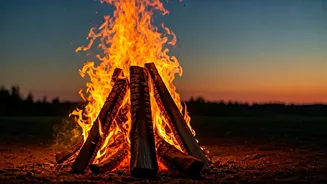
The ritual of Holika Dahan, often referred to as Chhoti Holi or Holika Deepak, carries specific astrological considerations to ensure its auspiciousness. The optimal time for Holika Dahan in 2026 is scheduled between 06:22 PM and 08:50 PM on Tuesday, March 3, offering a window of 2 hours and 28 minutes for this significant ceremony. Hindu scriptures stipulate that Holika Dahan should ideally occur during the Pradosh Kaal, the period following sunset, provided the Purnimasi Tithi is still prevailing. A crucial factor to consider is the presence of Bhadra, an inauspicious time. Bhadra begins in the early hours of March 3, with Bhadra Punchha from 01:25 AM to 02:35 AM and Bhadra Mukha from 02:35 AM to 04:30 AM. According to tradition, all auspicious activities should be avoided during the Bhadra period. Therefore, the Holika Dahan timing is carefully selected to occur during Pradosh Kaal without the influence of Udaya Vyapini Purnima, ensuring the ritual is performed at the most propitious moment.
Origins and Significance
Holi's roots delve deep into ancient India, evolving from simple spring fire rituals mentioned in Vedic texts like the Rigveda. These early practices, known as 'Holaka,' involved purification bonfires during Phalguna (February-March) to celebrate the harvest, ward off winter's negativity, and welcome spring. Over time, the festival gained richer narratives. The widely popular story of Prahlad and Holika, a pivotal Puranic tale, explains the origin of the bonfires. Prahlad, a devout follower of Lord Vishnu, defied his demon king father Hiranyakashipu. His aunt, Holika, who possessed a boon of fire immunity, attempted to burn Prahlad by sitting with him on a pyre, but she perished while Prahlad survived, symbolizing the triumph of devotion and righteousness. Furthermore, tales of Lord Krishna's playful revelry during Holi have deeply influenced the festival's joyous and colorful character, inspiring numerous folk songs and traditions that continue to be celebrated today.
Celebration Traditions
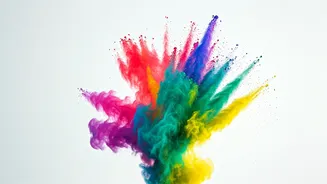
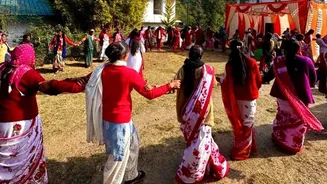
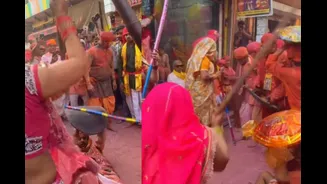
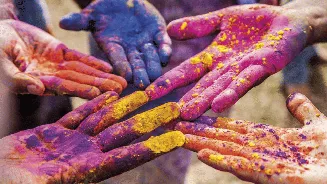
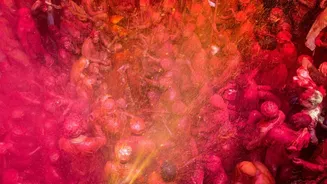
Across India, Holi is cherished with vibrant celebrations, albeit with some regional nuances. The core of the festival involves two main days. The preceding evening is marked by Holika Dahan, where a pyre is lit, and offerings such as ghee and cow dung cakes are made along with prayers for family protection. This ritual symbolizes the burning away of evil. The following day, the main festival of Holi, bursts with color. Celebrations often begin with playing with colors, sometimes involving idols in homes or temples, followed by offering Prasad to family deities. The day is characterized by an outpouring of joy, as people smear colored powders and water on each other, rekindling childhood innocence and forgetting enmities. Many communities gather in the evening to share meals, seek blessings, and exchange good wishes, reinforcing bonds of friendship and community.