






Javanese Origins, Indian Adaptation
While Batik is globally synonymous with Indonesia, its intricate wax-resist dyeing technique has a deep and fascinating connection to India. The Javanese
approach, often characterized by ceremonial designs and royal symbols, was embraced and reinterpreted by Indian artisans. When this method arrived on Indian shores, it didn't remain a mere imitation. Instead, it sparked a wave of regional creativity, with different areas infusing the technique with their unique cultural aesthetics and motifs. For instance, Ujjain emerged as a significant production center, shifting from traditional mud-resist methods to the more refined wax application. This transition allowed for the creation of striking pieces featuring local tribal patterns, flora, and fauna. Similarly, Gujarat's Kutch region innovatively combined the fluid wax process with their penchant for sharp, detailed geometric designs, while artisans in Andhra Pradesh and Telangana used wax to illustrate mythological narratives and vibrant scenes of daily life, demonstrating the diverse artistic transformations of this imported craft.
Ancient Indian Resist-Dyeing
The practice of resist-dyeing isn't entirely new to India; in fact, Indian artisans were experimenting with similar techniques well over two millennia ago. Archaeological evidence suggests that rudimentary resist-printing on cotton was prevalent around the 1st century AD. This is visually corroborated by the patterns seen in the Ajanta and Ellora cave frescoes, where figures are depicted wearing garments adorned with distinct, crackled, geometric designs. Despite the lack of surviving ancient textiles due to India's challenging tropical climate, the art form persisted. India's historical advantage lay in its high-quality cotton and its mastery of vibrant natural dyes, particularly the deep indigos and rich madder reds, which were crucial for these early resist-dyeing traditions and laid the groundwork for future textile innovations.
Revival and Modern Expressions
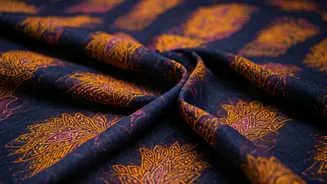
The Industrial Revolution posed a significant threat to traditional crafts like Batik, with mass-produced fabrics and synthetic dyes nearly causing its extinction. However, the 20th century witnessed a powerful resurgence, significantly influenced by Rabindranath Tagore. Tagore integrated Batik as a formal subject at Visva-Bharati University in Shantiniketan, elevating it from a humble craft to a respected fine art. This period also saw the innovation of leather Batik, leading to the iconic hand-painted leather goods. Later, in the 1960s, the Madras School of Arts championed the medium, popularizing 'Madras Batik' globally. This style became synonymous with the Western counterculture movement. Therefore, the intricate patterns and subtle cracks in Batik today are not just decorative elements but represent a rich tapestry of historical trade, cultural exchange, and artistic evolution across continents.
Trade Routes and Technique Exchange
The spread of Batik technology to India is closely tied to the extensive maritime trade activities of Indian merchants. These traders ventured across Southeast Asia, reaching destinations like Sumatra, China, and Java, exporting fine silks and meticulously dyed cottons. It was during these voyages that they encountered the sophisticated wax-resist dyeing methods practiced in Java. While Indian artisans were accustomed to using coarser resist materials like mud or sand (known locally as Dabu), the Javanese craftsmen utilized molten wax applied with a specialized tool called a Tjanting, achieving a higher level of precision. Recognizing the potential of this refined technique, Indian merchants brought it back home. The Khatri merchant communities, particularly those along the Gujarat trade routes, were among the first to adopt this Javanese wax-resist method, skillfully integrating it into their already flourishing textile businesses and marking a significant cross-cultural exchange in textile artistry.