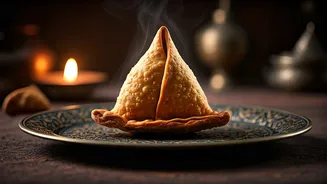



A Culinary Time Capsule
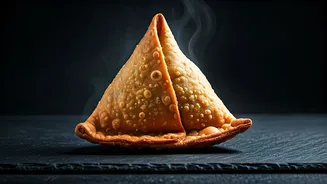
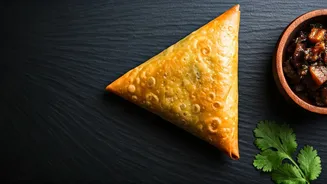
The humble samosa, a staple in Indian households and street food stalls, is currently at the center of a viral online conversation, not for its taste,
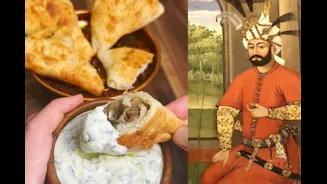
but for its surprising historical origins. A recent social media buzz has brought to light a 500-year-old recipe, purportedly originating from a Persian manuscript. This ancient document is believed to have journeyed through the hands of historical figures like Emperor Akbar and Tipu Sultan before its eventual acquisition by the British East India Company, and it now resides within the esteemed British Museum. This revelation challenges the modern perception of the samosa, prompting a re-evaluation of its ingredients and historical context, and highlighting how deeply food is intertwined with the tapestry of history and culture, evolving significantly over centuries.
The Ni'matnama's Secrets
This ancient recipe is a treasure from the "Book of Delights," known as Ni'matnama, penned between 1501 and 1510 for the Sultan of Mandu in central India. Back then, the samosa was far from a common snack; it was an elaborate creation prepared within opulent royal kitchens, intended to impress with its rich and intricate ingredients. Eschewing the potato filling familiar today, this historical version boasted a luxurious mixture of roasted aubergine pulp, dried ginger, and finely minced lamb, enhanced with the pungent notes of onion and garlic. The entire creation was then meticulously fried to perfection in ghee, presenting a culinary experience that was both sophisticated and deeply flavorful, a stark contrast to the everyday samosas known now.
Absence of Staples
Perhaps the most striking aspect of this rediscovered recipe is the complete absence of two ingredients that are now considered fundamental to the samosa: potatoes and chilies. These ingredients were not yet integrated into Indian culinary practices during the period this manuscript was compiled. Consequently, the samosa of that era would have presented a palate vastly different from the spicy, potato-laden versions most people recognize today. The flavor profile would have been more nuanced, relying on the earthiness of aubergine, the warmth of ginger, and the savory depth of lamb, without the heat that has become a characteristic of many Indian dishes.
From Palace to Pavement
Over the centuries, the samosa's journey mirrored that of many culinary creations, transitioning from the exclusive domain of royal kitchens to the more accessible sphere of common people. As its popularity grew and it spread across different regions, the recipe underwent natural transformations. Ingredients were simplified for ease of preparation and wider availability, gradually shaping the samosa into the beloved street food icon it is recognized as today. This evolution illustrates how food adapts to societal changes, becoming more inclusive and reflective of everyday life while retaining its core identity, albeit with significant ingredient shifts.
Digital Deluge and Debate
The virality of this historical samosa recipe has ignited a broader online discourse, with many users reflecting on the profound connection between food, history, and cultural identity. Comments highlight how such discoveries offer a tangible link to the past, demonstrating that food is an integral part of a nation's heritage. However, the interpretation of the samosa's origins is not without its dissenting voices. Some users have countered the narrative, suggesting the samosa has deeper Indian roots, possibly introduced from India to Arab lands during earlier invasions. This ongoing debate underscores the complex and often contested nature of culinary history, where a single dish can carry multiple layers of meaning and provenance.