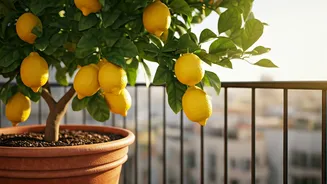







Choosing Your Lemon Tree
For a successful balcony lemon garden, opt for dwarf or grafted lemon varieties like Meyer or Ponderosa. These are specifically bred for container living,
maintaining a compact size and being easier to manage. Grafted plants often offer quicker growth and fruit production, giving you a head start on enjoying your harvest. Selecting the right starter plant is crucial for adapting to the limited space and conditions of a balcony environment.
The Perfect Potting
Selecting the right container is fundamental for your lemon plant's development. Begin with a pot that measures at least 12 to 16 inches in width. As your tree matures and grows, you'll want to gradually transition it into a larger pot, ideally between 18 to 24 inches in diameter. This progressive potting ensures the roots have adequate space to spread and support healthy growth, preventing root-bound issues and promoting a robust plant.
Crafting the Soil Mix
The foundation of a healthy lemon tree lies in its soil. Aim for a mix that is light, well-draining, and slightly acidic. A balanced blend of garden soil, compost, and sand is ideal, as it promotes excellent aeration, allowing vital nutrients to reach the roots effectively. Critically, this soil composition prevents waterlogging, a common issue that can lead to root rot and hinder plant vitality. Ensure the pot has drainage holes to further facilitate water removal.
Sunlight is Key
Sunlight is an indispensable element for flourishing lemon trees, making summertime an opportune period for their cultivation. Position your potted lemon plant in the sunniest available spot on your balcony. It's essential that the plant receives a minimum of six to eight hours of direct sunlight each day. This consistent sun exposure is vital for photosynthesis, flowering, and ultimately, fruit development, directly impacting the quantity and quality of your lemons.
Mastering Watering
Consistent moisture in the soil is paramount for lemon trees, yet overwatering is a frequent pitfall to avoid. The goal is to keep the soil moist, not saturated. During the intense heat of Indian summers, daily watering might be necessary, but always test the topsoil first by touching it. If it feels dry, it's time to water. This careful approach ensures the plant receives adequate hydration without succumbing to the detrimental effects of excess water.
Feeding and Pruning
Lemon trees are known for being heavy feeders, requiring regular nourishment to support their growth and fruiting cycles. Fertilize your plant with a citrus-specific fertilizer every four to six weeks; this is crucial for boosting flower and fruit production. Alongside feeding, regular pruning is vital for maintaining the plant's shape, encouraging bushier growth, and removing any dead or diseased branches. This maintenance also helps in keeping pests like aphids and mites at bay, with a simple neem oil spray being an effective preventative measure.
Encouraging Fruiting
Lemon trees are naturally self-pollinating, but in the confined space of a balcony, assisting this process can significantly improve fruit yield and quality. Gently shake the plant occasionally or use a soft brush to transfer pollen between blossoms. This small intervention can make a noticeable difference in the number of fruits your tree produces. Within a couple of months of attentive care, you can anticipate enjoying the fruits of your labor.