



Burger to Bloom
A captivating experiment by gardening enthusiast James Prigioni has captured widespread attention, demonstrating the potential for growth within unlikely
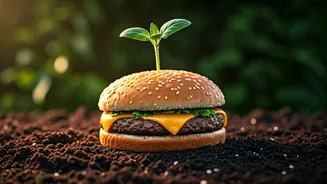
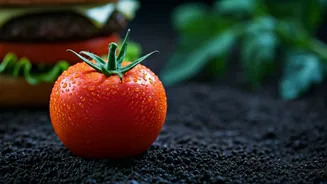
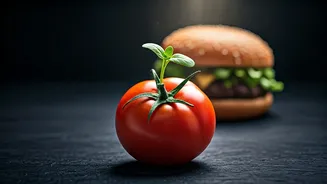
sources. Prigioni embarked on a unique project, utilizing the tomato slices from a popular fast-food cheeseburger as the starting point for cultivating new tomato plants. Instead of discarding the burger's components, he chose to investigate their viability for cultivation. He employed two distinct methods to test their growth potential. In one approach, he carefully extracted two seeds from a tomato slice and planted them directly into a cup. Simultaneously, for his second method, he opted to plant an entire tomato slice, soil and all, into a pot. This dual approach allowed for a comparative study of different starting conditions, aiming to uncover the most effective way to initiate plant growth from these unexpected origins.
Outdoor Transplant
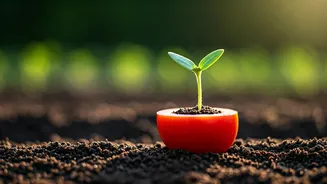
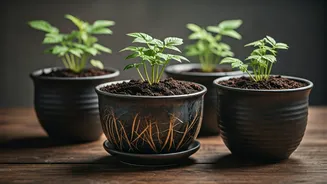
After a period of 23 days, both experimental setups showed promising signs of life, with both sets of plants successfully sprouting. Prigioni then proceeded to move his young plants to an outdoor environment to continue their development. The plant that originated from the seeds was carefully placed in a bucket, while the plant that grew from the full tomato slice was planted directly into the garden ground. Despite the change in environment, the growth continued. Prigioni candidly admitted that he did not consistently water the plant in the bucket, especially during several intensely hot days. Nevertheless, this plant demonstrated remarkable resilience, persisting in its growth and eventually beginning to produce tomatoes, defying the suboptimal conditions.
Early Fruiting Phenomenon
Remarkably, by the 94th day of the experiment, the plant housed in the bucket had already begun to yield ripe tomatoes. Prigioni speculated that this early fruiting might be attributed to the stress the plant experienced due to the inconsistent watering. This phenomenon, where plants under moderate stress can sometimes accelerate their reproductive cycles, suggests a fascinating biological response. It highlights how environmental challenges can, in some instances, spur earlier maturation as a survival mechanism. The plant's ability to produce fruit despite these adversities underscored its inherent vitality and the surprising robustness of its genetic makeup, originating from a source not typically associated with organic gardening.
Slice-Grown Astonishment
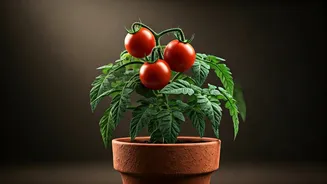
The most astonishing development came from the plant that originated from the entire tomato slice planted directly into the soil. By day 108, this particular plant was laden with an extraordinary number of tomatoes, with dozens ripening simultaneously on its branches. Prigioni expressed immense surprise, stating that while he anticipated growth, the sheer volume of fruit was far beyond his expectations. He noted that in his extensive gardening experience, he had never encountered a single tomato plant bearing such an abundant harvest. He proudly referred to them as "McDonald's tomatoes," emphasizing the humble beginnings of this prolific yield, originating simply from a cheeseburger.
Flavor and Genetics
Upon harvesting, Prigioni conducted a taste test of the yielded tomatoes. He described the flavor profile as having 'no acidity,' possessing a 'sweet but mild sweet' taste, characterizing them as the type of tomato one could enjoy eating in large quantities. He observed that the smaller tomato from the bucket plant possessed a slightly sweeter taste. Furthermore, Prigioni explained that due to their origin, these tomatoes are likely hybrids. This means that each plant grown from them may exhibit different characteristics, and the seeds produced might not grow into plants that are 'true to seed,' potentially leading to variations in future growth and fruit.
Ripening Challenges
As the experiment progressed to day 121, the plant that had been planted directly into the ground displayed numerous large tomatoes. However, a notable observation was that these tomatoes had not yet reached full ripeness. Prigioni suggested that this delayed ripening could be an inherent characteristic of hybrid plants, which sometimes lose their uniformity in the ripening process. Unlike some varieties that mature evenly, hybrid varieties can sometimes exhibit inconsistencies in how quickly their fruits develop and color, even when they are of substantial size. This observation added another layer of complexity to the fascinating outcomes of his experiment.
Gardening Inspiration
Prigioni shared that his primary motivation for conducting this experiment was simply for enjoyment and personal satisfaction. However, the project had an unexpected but positive impact on his overall gardening routine. The excitement and curiosity surrounding the progress of his burger-derived tomato plants spurred him to spend more time in his garden. This led him to pay closer attention to his other plants as well, essentially revitalizing his entire gardening space. The unique and refreshing experience of transforming a fast-food item into a substantial harvest of fresh produce deeply resonated with him.