

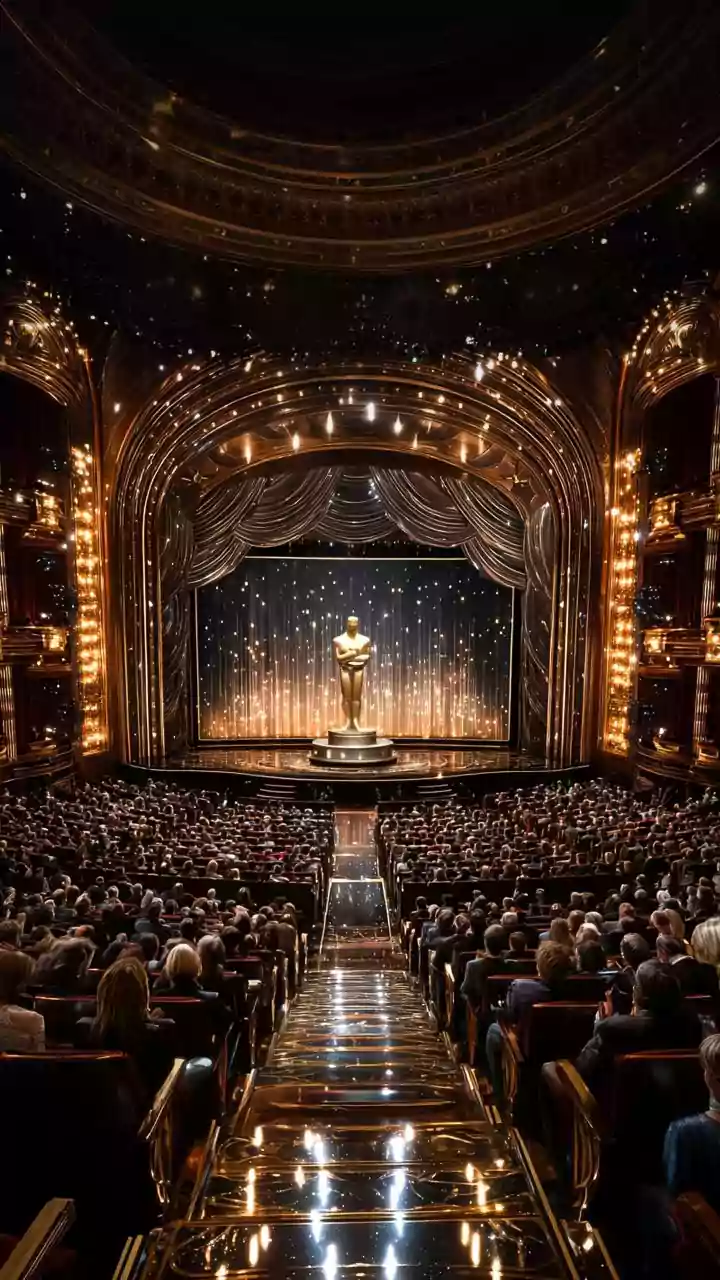

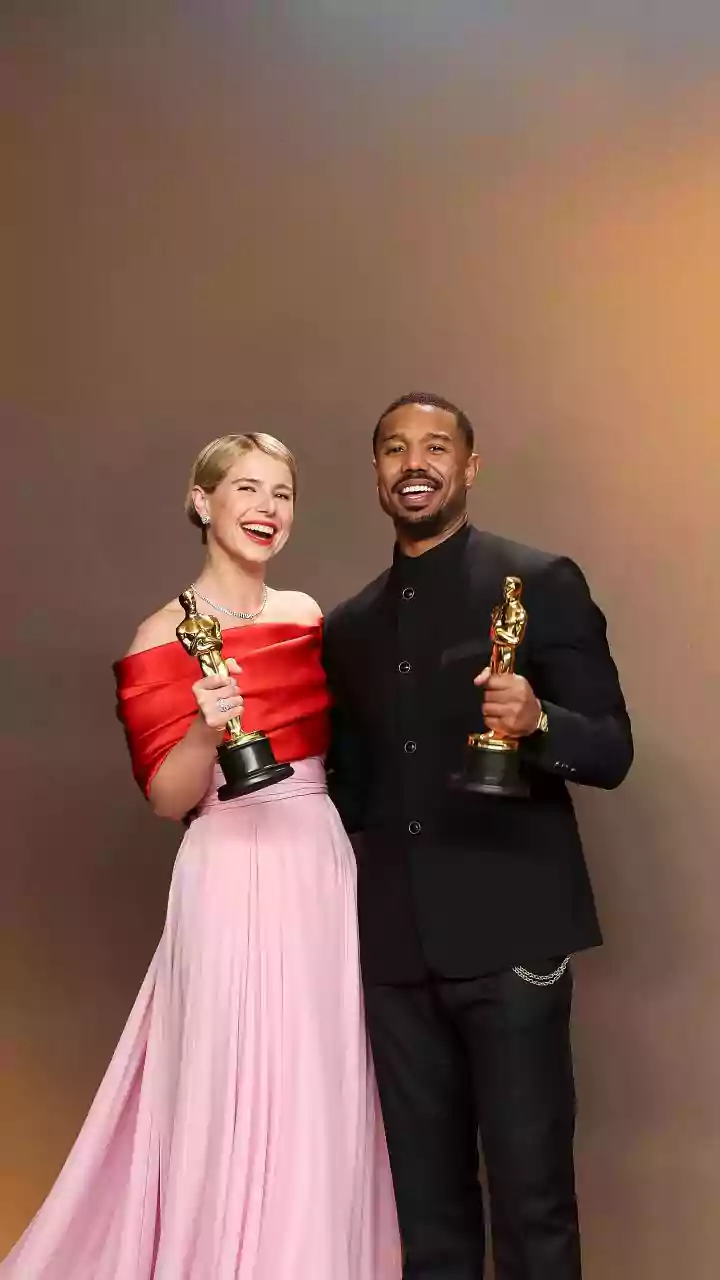
Two things simultaneously happened at Oscars 2026 – it was a predictable rounding off to the precursor awards season, secondly, for the eagle-eyed, the 98th
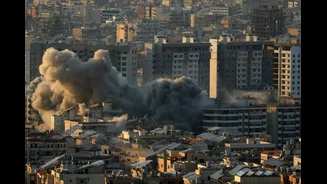
Academy Awards had an undercurrent of political rallying beneath the glamour of Hollywood. Unfortunately, while many winners and presenters chose to keep their acceptance speeches focused on filmmaking, several artists did use their moment under the spotlight to address global conflicts, gun violence, and political leadership, adding a tinge of urgent conversations to an otherwise celebration of cinematic extravaganza. From calls for peace in war-torn regions to pointed jokes about political leaders, the 98th Academy Awards however, managed to prove once more that the Oscars remain both a celebration of the film industry as well as a cultural barometer and social commentary.
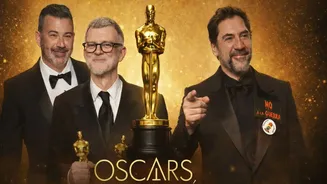
Javier Bardem’s “No War, Free Palestine” Call
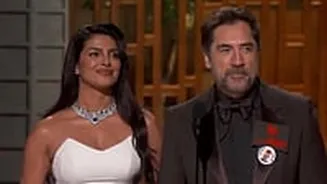
One of the most striking moments came when Spanish actor Javier Bardem took the stage to present the Oscar for Best International Feature Film alongside Bollywood’s very own Priyanka Chopra. Before revealing the winner, Bardem briefly paused and delivered a blunt message: “No to war and free Palestine.” The actor was also wearing a pin referencing protests against the 2003 Iraq War, reinforcing his long-standing reputation as a politically outspoken figure in Hollywood.
The award went to Sentimental Value, directed by Norwegian filmmaker Joachim Trier, whose acceptance speech continued the political tone. After speaking about the film, Trier ended his remarks with a paraphrase of American writer James Baldwin. “I want to end by paraphrasing the wonderful American writer James Baldwin, who reminds us that all adults are responsible for all children,” Trier said. “Let’s not vote for politicians who don’t take this seriously.”
Speaking backstage later, as per several reports, Trier elaborated on why he felt compelled to invoke Baldwin’s words, stating that the ongoing suffering of children in global conflicts had deeply affected him as a parent. Trier pointed to the impact of wars across regions, referencing children affected by violence in Palestine, Ukraine, and Sudan. “I’m not a politician, but I believe we need to work across the aisle to protect children in conflict situations and society in general,” he said
Documentary Winners Turn Spotlight On Gun Violence
Politics also entered the ceremony through the winners in the documentary categories, where the subjects themselves addressed pressing social issues. The Oscar for Best Documentary Short went to All the Empty Rooms, directed by Joshua Seftel. The film documents a seven-year project by correspondent Steve Hartman and photographer Lou Bopp, who photographed the untouched bedrooms of children killed in American school shootings. During his speech, Seftel named four children whose rooms were featured in the documentary - Hallie, Gracie, Dominic and Jackie - turning the stage into a moment of remembrance.
Jackie’s mother, Gloria Cazales, also addressed the audience. She spoke about losing her daughter during the Robb Elementary School shooting, when Jackie was just nine years old. She also highlighted the scale of the crisis, noting that gun violence has become the leading cause of death among children and teenagers in the United States. As per reports, Seftel later told reporters that school shootings have become alarmingly frequent. By focusing on the children who lost their lives, he said, the film hopes to keep their stories from fading from public memory.
A Film About Russia’s War Machine
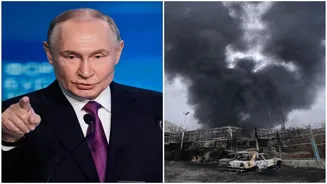
The political tone continued when the Best Documentary Feature award went to Mr. Nobody Against Putin. The film follows a Russian teacher secretly documenting how his school was transformed into a recruitment hub during the Russian invasion of Ukraine. Co-director David Borenstein used his speech to warn about the dangers of political complacency. “Mr. Nobody Against Putin is about how you lose your country,” Borenstein said, adding, “You lose it through countless small acts of complicity.”
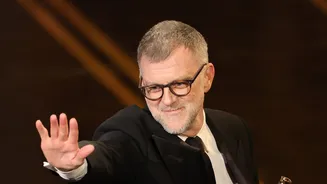
The film’s subject and co-director Pavel Talankin also delivered a plea for peace. “For four years we looked at the sky hoping to see shooting stars,” he said through a translator. “But in some countries, instead of shooting stars there are bombs and drones.”
“In the name of our future and our children,” he added, “stop all these wars now.”
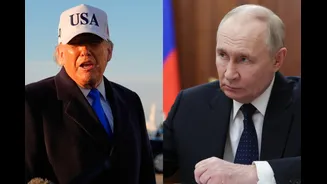
As per a report in Deadline, Borenstein stirred further debate by comparing political developments in the United States with those in Russia. He suggested that some of the democratic erosion seen under Vladimir Putin had parallels in America’s political climate. He specifically referenced Donald Trump, saying some of his Russian colleagues believed the pace of political change in the United States had been even faster.
“One interesting thing about working with a team of Russians throughout this process has been my desire as an American to constantly compare the situation in America to Russia,” Borenstein said, adding, “But a lot of my Russian colleagues and friends always said, ‘No, no, it’s not the same situation. It’s actually happening quicker in America than it’s been happening in Russia.’ Trump is moving a lot quicker than Putin in his early years.”
In fact, during the acceptance speech, David Borenstein even appeared to allude to controversies surrounding immigration enforcement and recent killings linked to federal agents in the United States. He said, “We act complicit when a government murders people on the streets of our major cities,” adding, “When we don’t say anything when oligarchs take over the media and control how we produce it and consume it.”
Jimmy Kimmel’s Political Jabs
Political commentary also came in the form of humour when late-night host Jimmy Kimmel appeared to present the documentary awards. Kimmel joked about restrictions on free speech around the world. “There are some countries whose leaders don’t support free speech,” he quipped. “I’m not at liberty to say which. Let’s just leave it at North Korea and CBS.” Kimmel also took a jab at Trump while introducing the nominees for Best Documentary Feature, joking that the former president might be upset that a documentary about his wife - Melania - was not nominated.
Paul Thomas Anderson's Political Hint
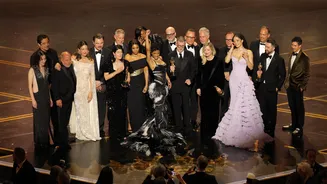
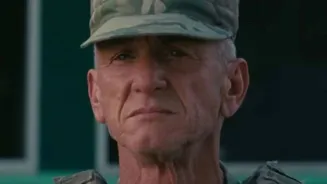
The night’s biggest triumph belonged to One Battle After Another, which emerged as the most awarded film of the ceremony with six Oscars. The sweeping, decade-spanning epic won Best Picture, Best Director, Best Adapted Screenplay, Best Supporting Actor for Sean Penn, as well as trophies for editing and the Academy’s newly introduced Best Casting category. Directed by Paul Thomas Anderson, the film follows a rebel group battling an authoritarian government faction that detains immigrants in camps as part of a campaign to “make America great once again.”
While accepting the Oscar for Best Adapted Screenplay, Anderson appeared to allude to those real-world resonances and reflected on why he wrote the film. According to Anderson, he said it was inspired by his children and the world their generation is inheriting. The director said, “I wrote this movie for my kids, to say sorry for the housekeeping mess that we left in this world we’re handing off to them. But also with the encouragement that they will hopefully be the generation that brings us some common sense and decency.”
Conan O’Brien’s Warning Early On ‘Things Could Get Political’
However, the political undercurrent was hinted at earlier in the evening, when host Conan O'Brien said politics might creep into the show. During his opening monologue, he joked that those uncomfortable with political commentary could watch an “alternate Oscars” hosted by Kid Rock at a nearby Dave & Buster’s.
But O’Brien also struck a more reflective note as the ceremony began telling viewers, “These are chaotic and frightening times.” He went on to remind audiences that the Oscars remain an international celebration of creativity, noting that films from 31 countries across six continents were represented at the ceremony.
In retrospect, Oscars 2026 has perhaps been more political than one really noticed.