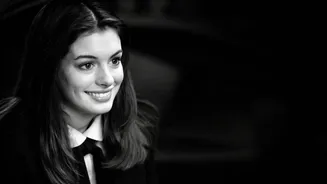







The gorgeous Anne Hathaway, whose The Devil Wears Prada has already gotten its much-deserved sequel, has revealed that she is intent on making The Princess
Diaries 3 a reality and that her team is "constantly working" on trying to make it a reality. In a recent interview, Hathaway, revealed she is "100 per cent" looking to return to Genovia, and if it does, I believe, it will allow millions of girls around the world to dream again. Growing up, at my North Kolkata home, Princess Diaries was watched begrudgingly. My elder sister, all of a year-an-half older to me, loved it. I publicly hated the ‘barbie doll’ story while secretly rooting for the tomboyish Mia Thermopolis while she made her transformation to a princess. When The Princess Diaries debuted in theatres in 2001, it not only introduced audiences to a charming fairy tale makeover story – it quietly reshaped how an entire generation of young girls thought about identity, confidence and possibility. Anchored by Anne Hathaway in her debut, the film delivered a message that felt both fantastical and deeply personal. Somewhere along the line, it taught that one does not need to be perfect to become extraordinary. At the centre of The Princess Diaries lies a story of transformation – but not a superficial one – something that the early 2000 direct-to-home films would often lean into. Mia starts off as an awkward, invisible teenager who is unsure of her place in the world. She is not Miss Popular, nor is she the confident leader. But mostly she is not the person anyone expects to become – a princess. And that is why her journey resonated so deeply. For millions of girls around the world, including my sister, she was not an aspiration in the traditional sense – she was relatable. AndAnne HathawayAnne Hathaway’s portrayal of Mia struck a rare chord. She did not play the character as a caricature of awkwardness or the clichéd ugly duckling. Instead, she infused Mia with sincerity, intelligence and emotional vulnerability. Her frizzy hair and clumsy stance were not flaws to be fixed, but were simply parts of who she was at that moment – and that resonated with many. The distinction mattered for many young viewers who saw in her a protagonist who was not polished, confident but still worthy of a grand destiny. And in a society, which still is not fully invested in letting girls dream, she became hope. The film’s iconic makeover scene is often remembered for its visual transformation. Anne Hathaway transforms with sleek hair, stylish clothes and a more ‘princess-like’ appearance. But what made the moment powerful was not the external change; but rather what followed. Mia did not suddenly become a different person, she still tripped, doubted herself and got overwhelmed by expectations. The message was subtle but not without clarity - transformation isn’t about erasing who you are, it is rather more about growing into yourself. Another thing about The Princess Diaries, when I think back, made it so impactful was its emphasis on choice. Mia never embraced her royal identity instantly. In fact, for the longest time, she resisted it. The idea of becoming a princess was not portrayed as an automatic dream coming true, but rather as a responsibility, challenge and at times, even a burden. The nuance gave young viewers something extremely rare in a fairy tale narrative, it gave the heroine they adored, agency. Mia’s eventual acceptance of her role as a princess was not driven by pressure or perfection, but rather through self-discovery. She realised that bring a princess was never about tiaras or public appearances, but rather about using her voice, standing up for others and believing in her worth. For many girls watching, this reframed what “being special” meant and suddenly the tiara was not only about beauty. It was not something being handed over by birthright, or popularity, it was something one defined through their actions and character. The iconic Julie Andrews as Queen Clarisse also played an important role in reinforcing the film’s message. Rather than being a distant, imposing authority figure, she became a mentor who guided Mia without forcing her to conform to set mold. Their relationship played out on patience, humour and mutual respect. The queen, never demanded perfection, rather she encouraged growth and this dynamic modelled a form of mentorship that felt supportive rather than critical, something many young viewers – who were often forced to strive for perfection inside their own homes - found both comforting and empowering. The film also challenged traditional beauty standards, even as it operated within them. Mia got a makeover – yes – but the story never suggested that her worth came from the change. In fact, some of the film’s most meaningful moments happened before the makeover, or in spite. Mia’s courageous monologue at the state dinner, her honesty with her friends, her ultimate decision to embrace her identity were all moments that defined her, not her appearance. The Princess Diaries endured because of its emotional honesty. Mia’s fears of not being good enough, of being judged, stepping into the unknown are all universal and they resonated with every young girl for whom it was/is a lived reality. The film did not pretend that confidence comes easily, but showed that growth can be messy, uncomfortable, and often filled with setbacks. But it also showed that those struggles are not signs of failure, bur is part of the journey. For young girls everywhere, this was a powerful message. The idea that one could be awkward, uncertain and yet still destined for greatness was not something often depicted in mainstream media. The Princess Diaries championed imperfection and suggested that one did not have to wait to fix oneself to pursue their dreams. Instead, one could start exactly from where they were. The legacy set by The Princess Diaries continues to resonate 15 years later – not because of its fairy tale premise – but because of its grounded message which continues to remind that identity is not static, but forever evolving. But most of all, it teaches that “anything is possible” never means that life will magically fall into place, but rather everyone has the capacity to rise to whatever challenge that comes their way. Mia Thermopolis was never just a fictional princes –she was a mirror. Anne Hathaway (through Mia) reflected the insecurities, hopes and potential of innumerable young adults who saw themselves in her story. And if The Princess Diaries 3 does happen, maybe that magic will once again trickle down and give the young adult audiences of today - not a fantasy of becoming someone else, but the courage of fully embracing their own identity.