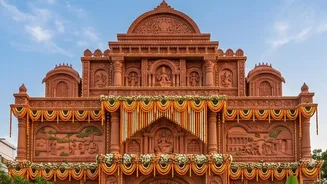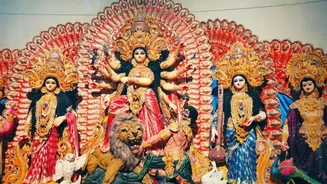






There is something about Durga Puja that goes beyond the five days of festivities. It lives in the sound of dhaak echoing through neighbourhoods, the fragrance
of shiuli flowers scattered across the morning grass, the sight of kaash phool swaying against a cerulean sky, and the unmistakable excitement of new clothes, pandal-hopping, adda and endless plates of bhog. For Bengalis, Durga Puja is not merely a festival; it is an emotion and a reminder of everything that makes childhood memories so precious. And few things capture this feeling as beautifully as Bengali cinema. Over the decades, filmmakers have used Durga Puja as a backdrop for stories about love, family, relationships, identity and the passage of time. Whether you are a Bengali missing home, someone looking to rediscover the magic of Pujo, or a film enthusiast hoping to experience the cultural richness of Bengal, these five films can transport you straight into the festive spirit.
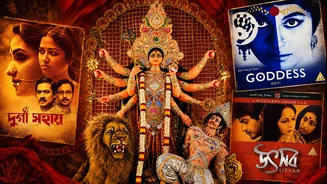
Utsab (2000): Directed By Rituparno Ghosh
If there is one film that captures the complicated emotional landscape of a Bengali family coming together for Durga Puja, it is Rituparno Ghosh's Utsab. Featuring an ensemble cast that includes Madhabi Mukherjee, Mamata Shankar, Prasenjit Chatterjee, Rituparna Sengupta and Arpita Pal, the film transforms an ancestral home during Pujo into a fascinating study of relationships, secrets and changing family dynamics. The story revolves around the members of an extended family who gather at their ancestral house for the annual celebrations. But beneath this festive exterior, lie unresolved tensions, financial anxieties, marital complications and emotional distances that time has failed to erase.
That contrast is what makes Utsab so affecting. Durga Puja is traditionally a time when families reunite, but the film gently reminds us that physical proximity does not necessarily translate into emotional closeness. The goddess returns to her parental home every year, bringing her children along, while the human beings gathered beneath the same roof struggle to reconcile their past with their present. For anyone who has returned to their ancestral home during Pujo after spending months or years away, Utsab will feel particularly intimate. It is a film about the people who make a house a home, the memories that cling to its walls and the bittersweet realisation that families, much like the world around them, are constantly changing.
Devi (1960) By Satyajit Ray
Durga Puja is a celebration of the divine feminine, but Satyajit Ray's Devi explores the unsettling consequences of religious devotion when faith overwhelms reason. Set in nineteenth-century Bengal, the film stars Sharmila Tagore as Doyamoyee, a young woman whose father-in-law, Kalikinkar Roy, played by Chhabi Biswas, becomes convinced that she is an incarnation of the goddess Kali. What begins as an act of religious conviction gradually transforms Doyamoyee's life, placing her at the centre of a deeply disturbing conflict between belief, social expectations and individual freedom.
Although Devi is not a conventional Durga Puja film, it is an essential watch for anyone interested in the cultural and spiritual traditions surrounding goddess worship in Bengal. Ray examines the fine line between reverence and fanaticism, asking what happens when a human being is stripped of her individuality and transformed into an object of worship. Sharmila Tagore's restrained performance captures Doyamoyee's gradual psychological unravelling, while Ray's visual storytelling lends the film an atmosphere of growing unease. The goddess becomes both a symbol of immense power and a reflection of the anxieties imposed upon women by patriarchal society.
Uma (2018) By Srijit Mukherji
What if someone told you that the magic of Durga Puja could be recreated at any time of the year, simply because a child wished to experience it? That is the emotional premise of Srijit Mukherji's Uma, a film that celebrates the extraordinary power of love, imagination and the human desire to make someone else's dreams come true. Starring Jisshu Sengupta, Sara Sengupta, Anjan Dutt and Anirban Bhattacharya, the film follows Himadri, a father whose young daughter, Uma, is terminally ill. Having learnt about the magic of Durga Puja through stories, Uma longs to experience the festival herself. Determined to fulfil her wish, Himadri sets out to recreate the celebrations, even though the actual festival is months away.
What follows is an extraordinary undertaking that brings together strangers, artists and an entire community, all united by one father's determination to give his daughter a memory she can cherish.
Uma captures the essence of Durga Puja in a way that transcends religion and ritual. It is about the collective spirit that makes the festival so special: people coming together, contributing whatever they can and transforming an ordinary space into something magical.
Durga Sohay (2017) By Arindam Sil
Durga Puja is a celebration of the goddess's arrival, but what if the qualities we associate with her were reflected in an ordinary woman living among us? Arindam Sil's Durga Sohay, featuring Sohini Sarkar, Tanushree Chakraborty, Indrasish Roy and Koushik Sen, explores this idea through a story about class, gender and the search for dignity. The film centres on a domestic worker whose life becomes intertwined with that of an affluent household. As the story unfolds, the relationships within the family reveal uncomfortable truths about privilege, exploitation and the treatment of women from economically disadvantaged backgrounds.
The Durga Puja setting gives the narrative an added layer of meaning. While the city celebrates the power of the goddess, the film asks viewers to consider how society treats women who are vulnerable, marginalised or denied the respect they deserve. What makes Durga Sohay relevant during Pujo is precisely this juxtaposition between public celebration and private realities. The festival may bring people together beneath beautifully decorated pandals, but the inequalities that shape their everyday lives do not disappear with the sound of the dhaak.
Goynar Baksho (2013) By Aparna Sen
No festive movie list feels complete without a story that captures Bengal's unique blend of family drama, humour, tradition and the supernatural. Aparna Sen's Goynar Baksho, starring Moushumi Chatterjee, Konkona Sen Sharma and Saswata Chatterjee, offers precisely that combination. Adapted from Shirshendu Mukhopadhyay's story, the film follows three generations of women in a Bengali family, connected by a mysterious jewellery box and the ghost of a deceased relative. The narrative moves through changing social and political circumstances, exploring inheritance, women's agency, family relationships and the evolving place of women in Bengali society.
Although it is not exclusively a Durga Puja film, Goynar Baksho belongs on a festive watchlist because it evokes the cultural world that makes Pujo so evocative - old family homes, inherited traditions, generational conflicts, familiar rituals and stories passed down through the years. There is also something distinctly Bengali about the film's ability to combine the supernatural with everyday domestic life. The ghost is not merely a source of fright; she becomes a witty observer of social change, family politics and the absurdities of human behaviour. Konkona Sen Sharma brings considerable warmth to her character, while Moushumi Chatterjee's performance lends the story an engaging mixture of mischief and nostalgia.
Cinema And The Magic Of Pujo
Durga Puja is as much about the stories we carry as it is about the celebrations we witness. It is about returning home, reconnecting with loved ones, remembering childhood and finding joy in familiar rituals. Bengali cinema has often captured these emotions with remarkable sensitivity, reminding us that the festival means something different to everyone. From the family tensions of Utsab and the philosophical questions raised by Devi to the emotional journey of Uma, the social commentary of Durga Sohay and the nostalgic charm of Goynar Baksho, these five films offer different ways to experience Bengal's cultural and emotional landscape.
The real magic of Pujo is not just in welcoming Maa Durga into our homes, it is in rediscovering the child within us who still waits eagerly for her arrival.