







What is the story about?
Dilwale Dulhania Le Jayenge (DDLJ), directed by Aditya Chopra, is considered one of the most iconic films in Indian cinema history. Released in 1995, the film set
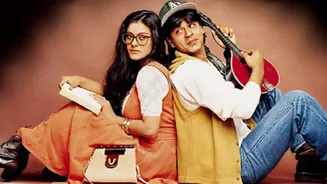
a new standard for Bollywood romance, setting fresh trends and establishing Shah Rukh Khan and Kajol as a superstar pairing. In a new interview, Kajol opened up about Simran's character and shared that she would not ask for permission in this generation; hence, she no longer exists today. She also mentioned what Gen Z should and should not take away from her and SRK film.
Kajol on Raj and Simran's love story relevancy
In a conversation with Lilly Singh on her podcast on YouTube, Kajol shared that her character, Simran from Dilwale Dulhania Le Jayenge, no longer exists in today’s world, saying, "I don’t think anybody at the age of 18 or 19 is going up and telling their dad, “Can I please go on this trip?” It’s more like, “Dad, I really have to go on this school trip, and you really have to pay for it.” So it’s more that than, you know, asking for permission.”
However, Kajol said that from DDLJ, she would like Gen Z to take away the idea that relationships and family matter at the end of the day, regardless of what one gains from life. She also said that she hopes they realize that family is eternal and loving, and that's what really matters.
Earlier speaking about Raj and Simran's love story relevancy today, Kajol shared that Kajol spoke during an edition of Expresso that Raj and Simran would not exist today. She thinks they would likely communicate over WhatsApp and ensure they had multiple options. She added that Simran would probably have several matches lined up on a dating app, just as Raj would, and concluded that she was unsure whether their love story could exist in today’s world.
About Dilwale Dulhania Le Jayenge
Dilwale Dulhania Le Jayenge (1995) is an iconic romantic drama directed by Aditya Chopra, featuring Shah Rukh Khan (Raj) and Kajol (Simran). The story revolves around two young Non-Resident Indians (NRIs) who fall in love while on holiday in Europe.
When Simran's strict father arranges her marriage in India, Raj convinces his family and travels to Punjab to marry her. The film brilliantly balances modern, progressive NRI views with traditional Indian family values. It also highlights that true love can win over hearts and cultural boundaries, with Raj wanting to be accepted by the family rather than just eloping.