








What is the story about?
Indian filmmaker Mehboob Khan holds a special place in Indian cinema’s history and its relationship with the coveted Academy Awards. Long before India became
a regular fixture at the awards conversations at the Academy and films like Slumdog Millionaire, RRR and The Elephant Whisperers triumphed at the Oscars, it was Khan’s work that carried Indian storytelling to Hollywood’s biggest stage. Mother India made history in 1958, barely eleven years after India became independent, by becoming India’s first-ever nomination for the Academy Award for Best International Feature Film. The film lost to other equally enthralling entries, but marked a defining moment in the country’s cinematic journey.
Rise of Mehboob Khan
Born in 1907 in Gujarat, Mehboob Khan would go on to become one of India’s most influential directors during the golden age of Hindi cinema. He created the dacoit genre of filmmaking in India and through endeavours such as 1949 Aurat and 1951 Aan, explored themes of poverty, morality, social injustice and rural life. His films often centred around strong female protagonists. However, it was Mother India, starring Nargis, Sunil Dutt and Rajendra Kumar in lead roles, which placed him firmly in the history books of Indian cinema.
Mother India and Oscar Breakthrough
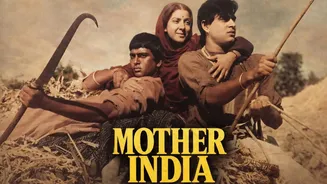
Mother India released in 1957 and starred Nargis as Radha, a resilient village woman who struggles against poverty, social expectations and personal tragedy while raising her children. Deeply rooted in Indian cultural identity, Mother India resonated strongly with audiences both in India and abroad, touching a universal chord. Recognising its international appeal, India submitted Mother India to the Academy Awards in the Best Foreign Language Film category (now called Best International Feature Film) at the Oscars.
And thus, at the 30th Academy Awards, Mother India became the first Indian film to be ever nominated in the category. Till then, Indian cinema, despite its size and popularity, had rarely been acknowledged in global awards circles. The nomination placed Mehboob Khan and Indian cinema firmly on the international map.
Mother India’s Near-Oscar Win
Mother India did not ultimately win the award. However, its journey remains one of the closest India has come to securing the trophy in that category. The Oscar that year went to the Italian film Nights of Cabiria directed by Federico Fellini. According to many historical accounts and industry anecdotes, Mother India reportedly lost by a very narrow margin (some say, a single vote). The other nominees were the German film The Devil Strikes at Night, the Norwegian production Nine Lives and the French film Gates of Paris
However, despite the loss, the nomination itself, at a time when world cinema was dominated by European films in the category, was nothing short of amazing.
Mother India’s Cultural and Cinematic Impact
Over the years, Mother India came to be regarded as one of the defining works of Indian cinema. It has frequently appeared in lists of the greatest Indian films ever made. Mehboob Khan’s Oscar breakthrough paved the way for future Indian entries at the Academy Awards. For many decades after Mother India, Indian films continued to be submitted annually in the international feature category.
Only a few have managed to repeat the feat of securing a nomination since then. Among them were Salaam Bombay! by Mira Nair and Lagaan directed by Ashutosh Gowariker. Each nomination revived memories of Mehboob Khan’s pioneering achievement.
Mehboob Khan’s Legacy
Beyond the Oscars, Mehboob Khan founded Mehboob Studios in Mumbai, where he created one of the most important production hubs in the country. Khan’s films were known for combining entertainment with social commentary - a style that later became a hallmark of mainstream Hindi cinema.
At the 55th Academy Awards, Bhanu Athaiya would go on to become the first Indian to win an Academy Award for designing the costumes of Gandhi.