








In Imtiaz Ali’s film, Main Vaapas Aaunga, a character says, “Mohabbat ka sabse bada dard bichhadna nahi, yaad reh jaana hai.” The movie, set against the
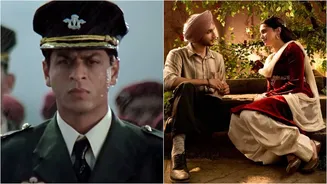
backdrop of Partition, explores the love story of Keenu (Vedang Raina/Naseeruddin Shah) and Jiya (Sharvari). More than just a romantic film, Main Vaapas Aaunga brings back a wave of cinema that propagates the sentiment of anti-war. Indian cinema, once known for larger-than-life patriotic war dramas, has seen a major shift with the arrival of new filmmakers who are liberal in their thoughts and are not afraid of expressing their ideologies through the visual medium. Anti-war cinema, though a popular concept in other countries, has been rarely explored in India. Yes, some filmmakers, like Sriram Raghavan, Farah Khan, JP Dutta, and now Imtiaz Ali, have raised the bar high with subtle undertones that created the right impact. Movies like Border 2, Ikkis, Main Hoon Na and Main Vaapas Aaunga have shaped patriotic cinema with a unique and different perspective of nationalism. Ahead of India’s 80th Independence Day (August 15), let’s revisit some of the best anti-war films made in the country.
Haqeeqat
Directed and produced by Chetan Anand, Haqeeqat, starring Dharmendra, is about the Sino-Indian war of 1962. Breaking the stereotype, the film had an anti-war sentiment stitched together with an emotional patriotic drama. Without losing the story’s core, Haqeeqat emphasised the tragedy and loss of human lives.
Dil Se
Dil Se isn’t a conventional anti-war film, but the Mani Ratnam directorial starring Shah Rukh Khan, Manisha Koirala and Preity Zinta explored the destruction caused by political violence, terrorism, and militarisation. The devastating consequences of violence were shown through Amar and Moina’s love story. Without glorifying war, Dil Se portrayed the emotional and human cost of conflict.
Main Hoon Na
Main Hoon Na did not feature war, but it was one of the strongest promoters of anti-war. When Project Milap was about to be accomplished, Raghavan (Suniel Shetty) stepped in to create an obstacle. The initiative that bridged the gap between India and Pakistan became the reason for Raghavan and Major Ram’s (Shah Rukh Khan) animosity. Eventually, love won over hate and Project Milap was a success. Farah Khan used commercial tools of romance, action, friendship and different shades of patriotism to showcase the bitterness that war brings along.
Ikkis
Ikkis is one of the best films that had an anti-war sentiment. Based on Arun Khetarpal, Sriram Raghavan also emphasised the loss of lives due to the conflict. The film’s core message was grief, loss, and patriotic sacrifice over victory. Through Dharmendra’s character, Raghavan held a mirror to human emotions rather than chest-thumping patriotism.
Border 2
Set during the Battle of Longewala, Border 2 promotes anti-war sentiment subtly. Through Diljit Dosanjh’s Nirmaljit Singh Sekhon, director Anurag Singh sends the dialogue that men at borders, even in Pakistan, are protected by their mothers’ blessings. The term ‘terrorist’ is blurred for a couple of minutes as the film treats them as armed representatives of the neighbouring country.
Main Vaapas Aaunga
Keenu and Jiya, leading a happy life in Sargodha, had to part ways due to the India-Pakistan partition. Not just his beloved, he lost his family and home to war and violence. Despite migrating to India, his heart remained in Pakistan, with Jiya. Until his last breath, Keenu remembered her, but couldn’t meet her. Main Vaapas Aaunga reflected the emotional damage and painful separation caused by war.
Indian cinema has more gems such as Sarfarosh, Laal Singh Chaddha and the recent Alpha that endorse anti-war sentiment. Even though chest-thumping patriotism has defined the genre, the shift in storytelling is prominent and much welcomed, especially when the country celebrates its 80th Independence Day.