


What's Happening?
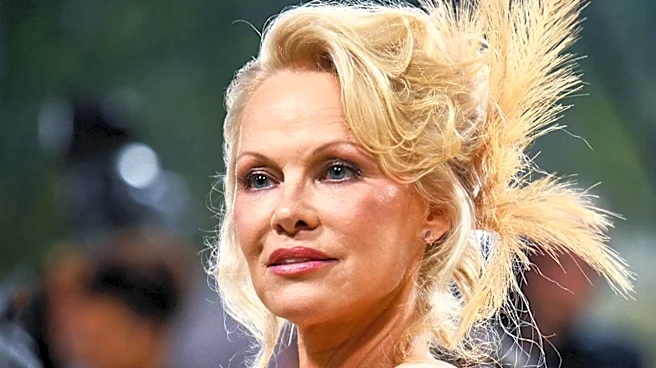
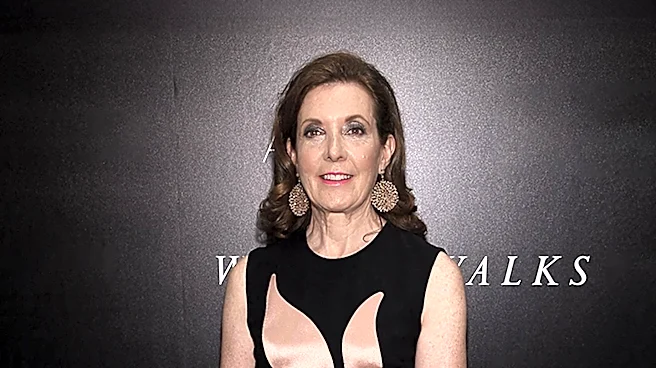
Actress Pamela Anderson is making headlines for her recent public appearances, where she has opted for a natural look with minimal makeup. This stylistic evolution was notably showcased at high-profile events such as the Venice Film Festival and various
Los Angeles galas. Anderson emphasizes that her choice reflects a deeper sense of self-acceptance and personal confidence, moving away from the heavily layered traditional styles that previously defined her public image. This shift is also attributed to a personal journey following the passing of her longtime makeup artist. She integrates classic cinema references with a conscious approach to elegance, incorporating sustainable fashion choices and lab-grown diamonds in her ensembles, demonstrating that a fresh face can still align with haute couture and grand celebrations.
Why It's Important?
Pamela Anderson's decision to forgo extensive makeup and embrace a more natural aesthetic carries significant cultural weight, particularly within the entertainment industry. Her public embrace of self-acceptance challenges long-standing beauty mandates and external pressures often placed on women in Hollywood. This move can inspire a broader conversation about authenticity, aging gracefully, and redefining beauty standards beyond heavy cosmetics and elaborate styling. For the fashion and beauty industries, it signals a potential shift towards more natural and sustainable trends, influencing consumer preferences and product development. Her emphasis on personal comfort and confidence over external validation offers a powerful message to her global audience, potentially empowering individuals to prioritize self-love and authenticity in their own lives.
What's Next?
Pamela Anderson's continued public appearances are likely to further solidify her role as an icon of natural beauty and self-acceptance. Her influence may encourage other public figures to adopt similar approaches, potentially leading to a broader trend within the entertainment industry. We can anticipate ongoing media coverage and discussions surrounding her stylistic choices, which could spark further dialogue about beauty standards, ageism, and the pressures faced by women in the public eye. Her integration of sustainable fashion and lab-grown diamonds also suggests a continued commitment to conscious consumerism, which may inspire her followers and contribute to the growing movement towards ethical practices in fashion and jewelry. Her journey is expected to continue evolving as a visual record of her personal growth and professional maturation.
Beyond the Headlines
Beyond the immediate impact on beauty and fashion trends, Pamela Anderson's transformation delves into deeper ethical and cultural dimensions. Her rejection of conventional beauty norms can be seen as a powerful statement against the often unrealistic and unattainable standards perpetuated by media and advertising. This shift encourages a re-evaluation of what constitutes 'glamour' and 'elegance,' suggesting that true sophistication stems from inner confidence rather than external artifice. It also highlights the personal and emotional journey of self-acceptance, particularly for individuals who have lived under intense public scrutiny. Her story underscores the importance of personal agency in defining one's image and challenges the societal expectation that women must constantly strive for an idealized, often youthful, appearance. This could foster a more inclusive and accepting cultural dialogue around beauty and aging.