

What's Happening?
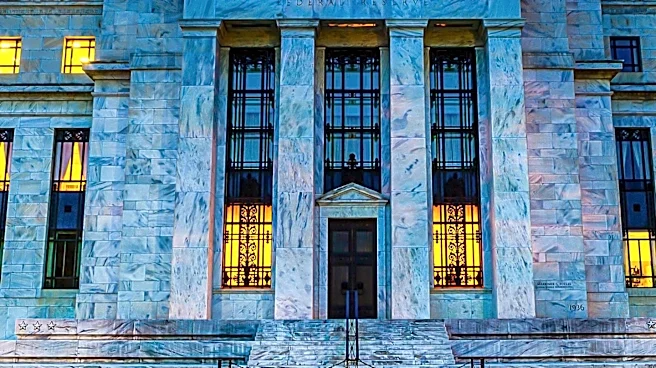
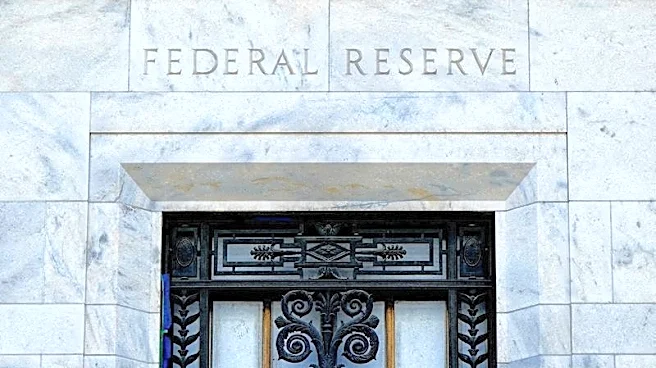
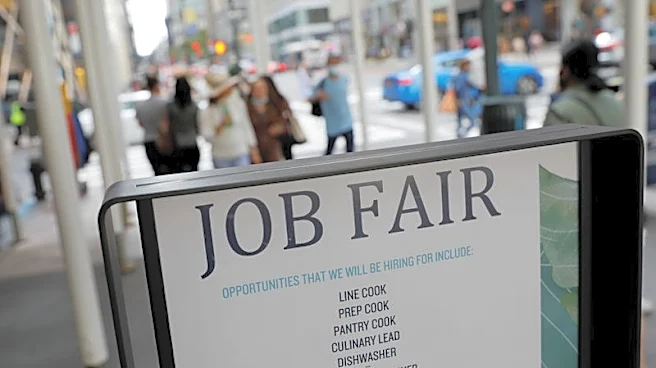
The July jobs report revealed a contraction of 23,000 jobs, contrary to expectations of an 80,000 job increase. This unexpected decline in payrolls, coupled with a slight decrease in the unemployment rate to 4.1%, has strengthened the argument for the Federal
Reserve to hold interest rates steady. Significant job losses were noted in local government education, retail, and the financial sector, while healthcare saw job gains. The report has prompted discussions among Federal Reserve officials about the health of the labor market and its implications for future monetary policy decisions.
Why It's Important?
The weaker-than-expected jobs report raises concerns about the stability of the U.S. labor market, which could influence the Federal Reserve's approach to interest rate adjustments. A cautious stance on rate hikes may be adopted if the labor market continues to show signs of weakness. This decision could impact borrowing costs, consumer spending, and overall economic growth. The Federal Reserve's dual mandate of maintaining stable inflation and high employment means that labor market conditions are a critical factor in shaping monetary policy.
What's Next?
The Federal Reserve will continue to monitor labor market trends and inflation data to guide its interest rate decisions. Upcoming economic indicators, including inflation reports, will be crucial in determining the Fed's course of action. Policymakers will be assessing whether the current labor market conditions warrant a pause in rate hikes or if further action is needed to address inflationary pressures.