
What's Happening?
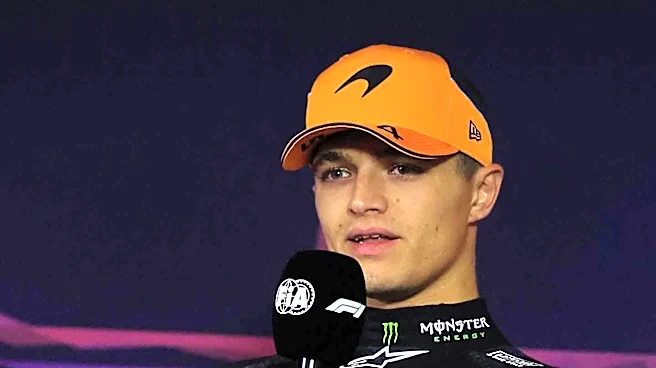
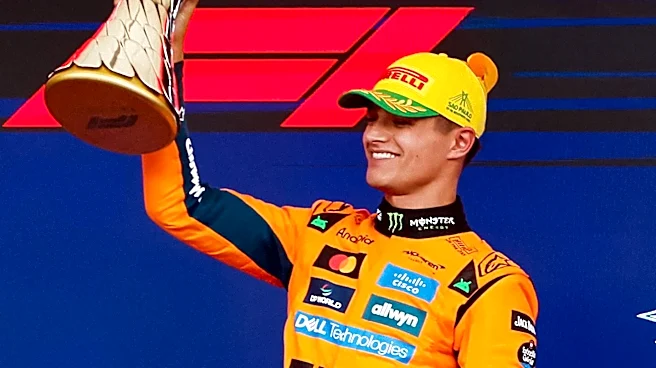
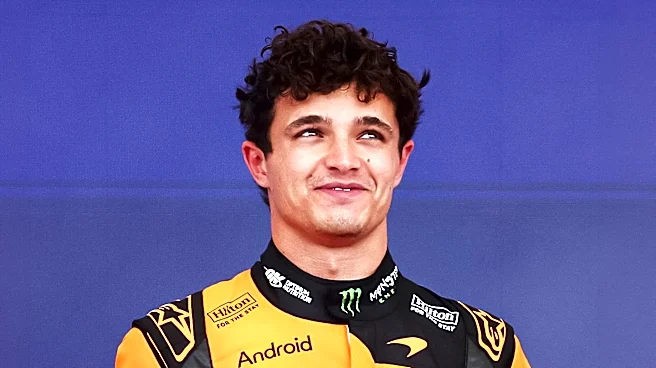
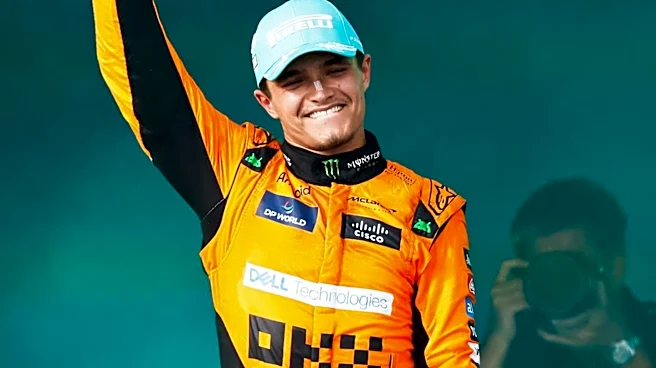
Lando Norris, a British Formula 1 driver, won the Sao Paulo Grand Prix in 2026, marking his 14th career victory and 50th podium finish. The race was characterized by mixed weather conditions, with rain falling throughout the afternoon, making tire choices
critical. Norris started from pole position, his 20th career pole and third consecutive at Interlagos. Despite losing the lead early in the race, he fought back, eventually moving to intermediate tires as rain returned late, securing a 14.602-second lead over Max Verstappen, who started 21st due to engine penalties. This victory has drawn comparisons to Jenson Button's 2012 win at the same track, also in wet conditions, sparking debate among fans about Norris's standing among elite drivers. Norris had previously won at Interlagos from pole in 2025, a year he also clinched a world title.
Why It's Important?
Norris's victory in Sao Paulo underscores the critical role of driver adaptability and strategic decision-making in Formula 1, especially in unpredictable weather. His performance in challenging conditions highlights his growing skill set and positions him as a formidable competitor in the sport. The comparison to Jenson Button, a respected British world champion known for his wet-weather prowess, elevates the significance of Norris's achievement. This win not only adds to his career statistics but also fuels discussions about his potential to surpass established legends. For McLaren, Norris's consistent performance, including his 2025 title win and multiple poles, reinforces their competitive standing in the constructors' championship, even in a season where Mercedes won the constructors' title. Such high-profile wins attract global attention to Formula 1, impacting viewership, sponsorship, and the sport's overall commercial appeal.
What's Next?
With three races remaining in the current season—in Las Vegas, Qatar, and Abu Dhabi—Norris will aim to maintain his momentum and potentially improve his sixth-place standing in the championship. The debate surrounding his comparison to Jenson Button is likely to continue, with a second world title for Norris potentially settling the discussion among fans and pundits. McLaren will continue to develop their car, aiming to provide Norris with a more consistently competitive vehicle to challenge for future championships. The team's performance in the upcoming races will be crucial for their final position in the constructors' standings and for setting the stage for the 2027 season. Norris's ability to perform under pressure and adapt to varying conditions will be a key factor in his future success and McLaren's aspirations.
Beyond the Headlines
Norris's recent win in Sao Paulo, particularly in adverse weather, highlights the evolving nature of Formula 1 racing, where technological advancements are increasingly complemented by raw driving talent and strategic acumen. The discussion comparing him to Jenson Button delves into the subjective criteria used to evaluate driver greatness, moving beyond mere statistics to consider factors like race craft, adaptability, and the context of their respective eras. This ongoing debate reflects the passion and historical depth within the sport, where past achievements are constantly re-evaluated against contemporary performances. Furthermore, the incident on the podium where Norris caught his ear on a live sparkler, though minor, serves as a reminder of the high-octane environment and the occasional unpredictable elements that accompany victory celebrations in Formula 1, adding a human element to the otherwise highly technical sport.