







What's Happening?
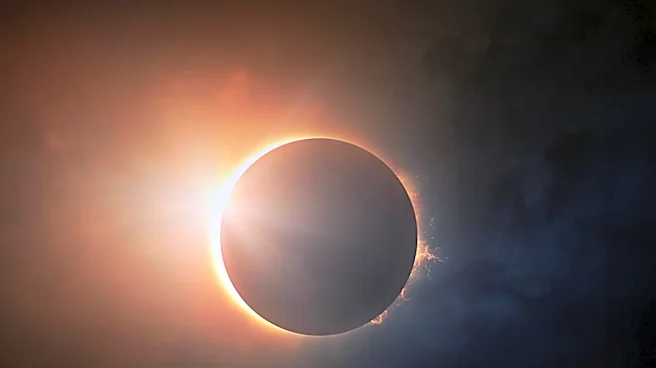
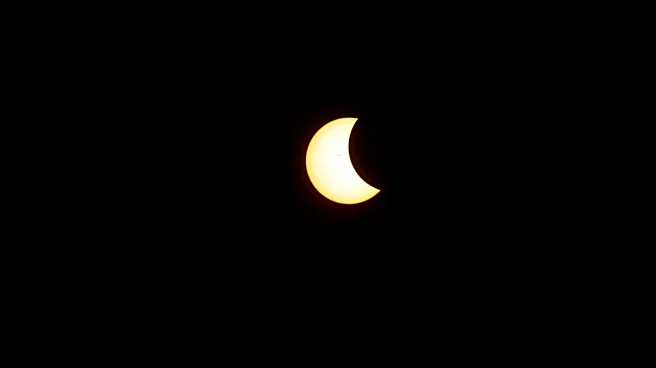
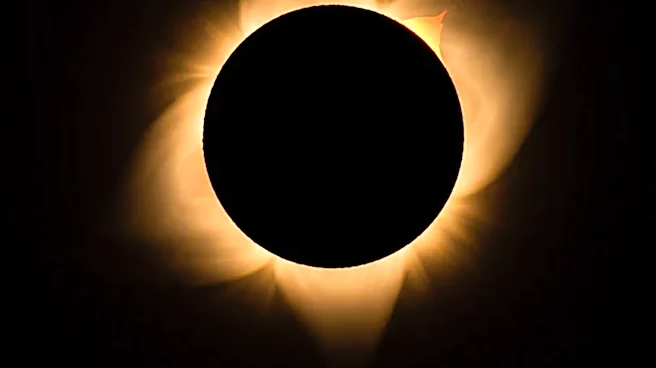
On August 12, 2026, a total solar eclipse will occur, captivating skywatchers across parts of Greenland, Iceland, and Spain. This event marks the first total solar eclipse visible in Europe since 1999. The path of totality will allow observers in these
regions to experience the brief transformation of day into night, with the maximum duration of totality lasting up to 2 minutes and 18 seconds. Spain is expected to be a popular destination for eclipse viewers due to favorable weather conditions, although the low position of the sun in the sky during totality presents a viewing challenge.
Why It's Important?
Total solar eclipses are rare astronomical events that offer unique opportunities for scientific observation and public engagement with astronomy. This eclipse provides a chance for researchers to study the sun's corona and other solar phenomena. For the general public, it is an opportunity to witness a spectacular natural event, potentially boosting tourism in the regions along the path of totality. The event also serves as a reminder of the importance of scientific literacy and the role of astronomy in understanding our universe.
What's Next?
In the lead-up to the eclipse, there will be increased public interest and media coverage, with organizations providing guidance on safe viewing practices. Local governments and tourism boards in the path of totality may prepare for an influx of visitors, organizing events and educational programs. Post-eclipse, scientists will analyze data collected during the event, contributing to ongoing solar research. The next total solar eclipse visible in Europe will not occur until 2027, making this event a significant occasion for both scientists and the public.