





What's Happening?
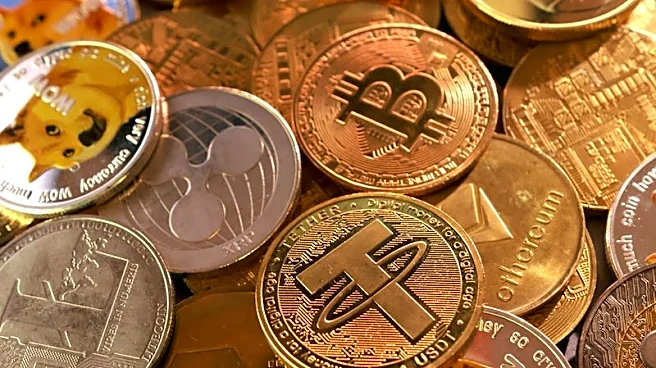
Dogecoin (DOGE) is currently trading at 96 satoshi against Bitcoin (BTC), a significant drop from 160 satoshi a year ago, marking a 40% loss in value relative to Bitcoin. In dollar terms, DOGE is priced at approximately $0.0775, having recovered slightly
by 6% since an election-night low. This decline is attributed to several factors, including an annual inflation rate of nearly 2.9% due to the continuous issuance of 10,000 new DOGE coins per block, totaling about 13.5 million new coins daily. Network activity has also decreased, with active addresses falling by 42% and new addresses by 55% over the past year. Additionally, U.S. Dogecoin funds hold only $12.9 million, an amount insufficient to offset the daily influx of new coins.
Why It's Important?
The weakening performance of Dogecoin against Bitcoin indicates a shift in investor sentiment, with money moving out of riskier assets like DOGE and into more stable cryptocurrencies like BTC. This trend suggests that investors are becoming more risk-averse, which can impact the broader cryptocurrency market. The continuous inflation of DOGE, coupled with declining network usage, creates a challenging environment for its price appreciation, as constant buying pressure is required to absorb the new supply. For U.S. investors, the limited institutional investment in Dogecoin ETFs, compared to Bitcoin, highlights a lack of significant institutional support, making DOGE more susceptible to market fluctuations driven by retail sentiment. This situation underscores the inherent volatility and speculative nature of meme coins compared to established cryptocurrencies.
What's Next?
For Dogecoin, the immediate future hinges on its ability to hold the 96 satoshi support level against Bitcoin. A sustained rise above 100 satoshi would signal a potential recovery and a closing of the gap with Bitcoin. Conversely, a fall below this level would indicate a breach of the October low, potentially leading to further price depreciation. Traders are advised to align leverage with support levels, such as $0.0724 and $0.068, to manage risk. Additionally, investors in Germany are reminded that swapping DOGE for Bitcoin is considered a taxable event if the coins were held for less than a year. The ongoing debate in Berlin regarding crypto holding period reform could also impact tax implications for European investors.
Beyond the Headlines
The performance of Dogecoin serves as a barometer for the broader speculative segment of the cryptocurrency market. Its struggle to maintain value against Bitcoin, despite a general market rebound, suggests that the 'meme coin' phenomenon might be maturing, with investors prioritizing fundamental value and scarcity over hype. The continuous issuance of new DOGE coins, a core design feature, presents a long-term challenge for its value proposition, contrasting sharply with Bitcoin's capped supply. This situation highlights a fundamental economic principle: without sufficient demand to absorb an ever-increasing supply, value tends to dilute. The declining network activity also raises questions about the utility and adoption of Dogecoin beyond speculative trading, indicating a potential lack of organic growth in its user base.