





What's Happening?
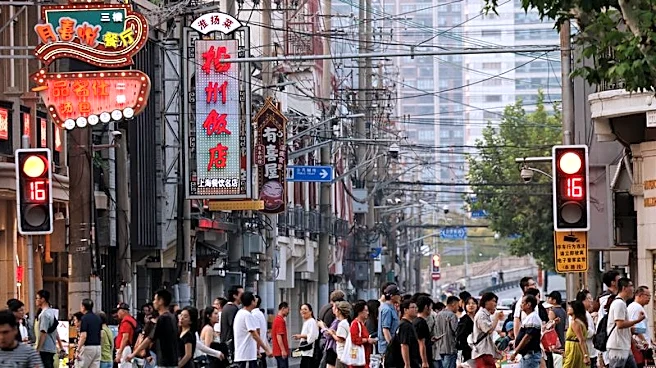
China's imperial cuisine, once central to court rituals and daily meals of emperors, continues to be preserved and served in establishments like Fangshan Restaurant in Beijing. This culinary tradition, which fuses Manchu and Han cooking styles, emphasizes
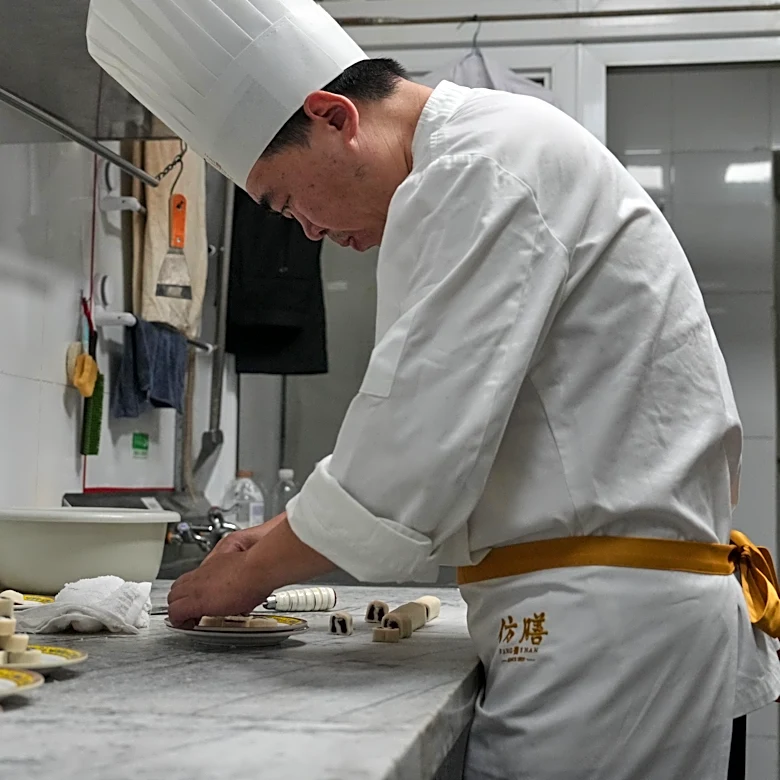
historical significance and meticulous preparation. Dishes often carry stories, such as the 'dream pastry' associated with Empress Dowager Cixi. Researchers like Teng Deyong from China’s Palace Museum highlight the elaborate rituals surrounding imperial dining, including milk tea ceremonies and the distribution of sacrificial pork. Wandi Wang, a professor at Lehigh University, notes that unseasoned dishes in ancient rituals symbolized honoring antiquity. Traditional techniques, passed down through generations, are still employed, eschewing modern machinery to maintain authentic textures and flavors, as exemplified by chef Zhou Tong's pastry-making methods.
Why It's Important?
The preservation of imperial cuisine in China is important as it offers a tangible link to the nation's rich cultural heritage and historical practices. It demonstrates how culinary traditions can reflect broader societal values, political ideals, and aesthetic principles that have evolved over centuries. For the U.S., understanding such cultural preservation efforts in China can provide insights into the country's national identity and its approach to heritage, which can influence diplomatic and cultural exchanges. The meticulous, handcrafted approach to food preparation also highlights a contrast with modern industrial food production, offering a different perspective on culinary value and authenticity. This cultural depth can foster greater appreciation and understanding of Chinese society beyond economic or political narratives.
What's Next?
Restaurants specializing in imperial cuisine, such as Fangshan, will likely continue their efforts to balance ancient cooking methods with contemporary tastes and ingredient availability. Executive chef Fan Liangliang notes that while rare ingredients like bear paws are no longer used, adaptations are made to retain the spirit of each dish. The focus will remain on the educational aspect, with servers sharing the historical narratives behind the dishes to enhance the dining experience. This ongoing commitment to heritage, even with necessary modifications, suggests a future where these culinary traditions continue to evolve while staying true to their historical roots, potentially attracting more international interest and cultural tourism.
Beyond the Headlines
Beyond the immediate culinary experience, the persistence of imperial cuisine reflects a deeper cultural commitment to memory and identity in China. As Professor Wandi Wang states, 'Culinary heritage tells us not only how people ate in the past, but also how people in the present choose to remember and give meaning to that past.' This highlights the role of food as a powerful medium for cultural transmission and historical narrative. The blend of Manchu and Han traditions within imperial cuisine also symbolizes the historical integration of diverse ethnic influences into a unified Chinese culture. This ongoing cultural practice underscores the importance of tradition in a rapidly modernizing society, offering a counter-narrative to purely economic or technological advancements.