



What's Happening?
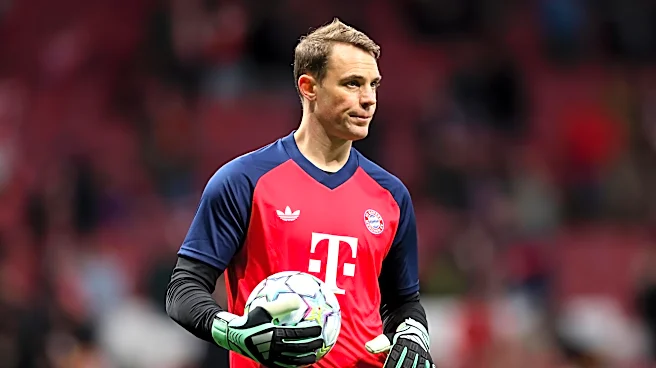
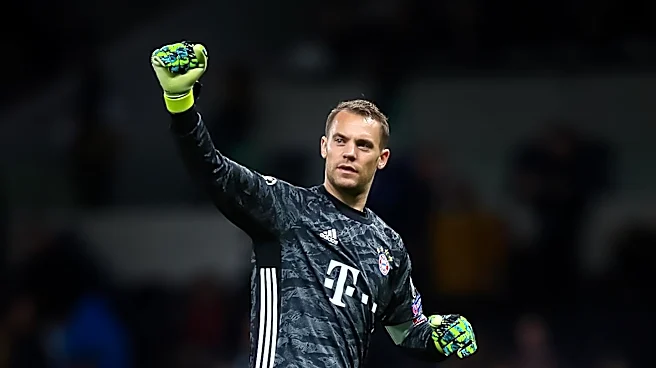
Manuel Neuer, the veteran goalkeeper for Bayern Munich, made history during the club's 2-1 victory over Mainz by becoming the oldest player ever to represent Bayern Munich in the Bundesliga. At 40 years and 225 days old, Neuer surpassed the previous record
held by Bernd Dreher. This milestone occurred despite Neuer being forced to leave the pitch shortly before halftime due to an injury. In addition to this age record, Neuer also reached his 550th Bundesliga appearance, placing him fifth on the competition's all-time appearance list, with a realistic chance to climb to third before the end of the season.
Why It's Important?
Manuel Neuer's achievement underscores his remarkable longevity and enduring impact on German football. Reaching such an age while still performing at the highest level for a top club like Bayern Munich is a testament to his dedication, physical conditioning, and skill. This milestone not only solidifies his legendary status but also highlights the increasing trend of athletes extending their careers through advanced training and medical support. His continued presence and record-breaking performances serve as an inspiration for younger players and demonstrate the value of experience in professional sports. The injury setback, however, reminds us of the physical toll even the most resilient athletes face.
What's Next?
Despite the injury that forced him off the field, Manuel Neuer's immediate focus will be on recovery to return to action as soon as possible. His goal will likely be to continue adding to his appearance tally and potentially climb further up the Bundesliga's all-time list. Bayern Munich will rely on his leadership and experience as they navigate the remainder of the season. His performance and health will be closely monitored, especially given his age, to ensure he can maintain his elite level. The club will also need to manage his workload carefully to prevent further injuries and prolong his illustrious career.
Beyond the Headlines
Manuel Neuer's career trajectory and recent milestone offer a compelling narrative about the evolution of sports science and athlete management. His ability to compete at an elite level well into his forties challenges traditional notions of athletic prime and retirement ages. This trend has broader implications for sports, including coaching strategies, player development, and the economic value of veteran athletes. His story also highlights the mental fortitude required to overcome physical challenges and maintain motivation over decades in a highly competitive environment, setting a benchmark for future generations of goalkeepers and athletes alike.