






What's Happening?
Verdera Energy, an exploration-stage mining company, has reached an agreement to sell its Treeline Uranium Project, located in New Mexico, US, to Americas Uranium. This transaction is formalized under a mineral property purchase and sale agreement. The
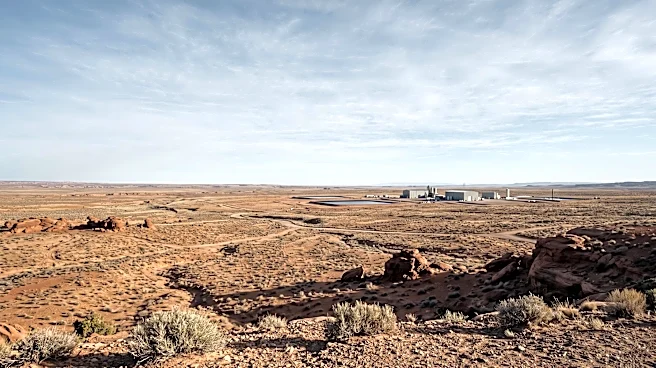
Treeline property, situated in Cibola and McKinley Counties, is estimated to contain 1.02 million pounds of triuranium octoxide. Americas Uranium will acquire a 100% interest in the project, subject to existing and newly granted royalties. The consideration for this acquisition includes a cash payment of $100,000 upon closing of the deal, along with C$2 million in common shares of Americas Uranium. A significant portion of the share consideration, specifically 90%, is scheduled to be issued in stages over a 36-month period following the completion of the transaction. Additionally, Verdera Energy will retain a 1.5% royalty on the net proceeds generated from uranium production and a 1.5% net smelter returns royalty on other minerals extracted from the property. This royalty on both uranium and other minerals can be reduced to 1% if Americas Uranium makes a C$400,000 payment to Verdera.
Why It's Important?
This acquisition is significant for the U.S. critical minerals sector, particularly in the context of domestic uranium supply. The Treeline Uranium Project's estimated 1.02 million pounds of triuranium octoxide represents a notable addition to Americas Uranium's portfolio, potentially bolstering U.S. capabilities in uranium extraction. As global demand for nuclear energy and related materials continues to evolve, securing domestic sources of uranium becomes increasingly important for national energy independence and security. The structured payment plan, involving both cash and staged share issuance, reflects a common approach in the mining industry for managing risk and aligning interests between the buyer and seller. The retained royalties for Verdera Energy ensure a long-term financial interest in the project's success, providing ongoing revenue streams tied to future production. This deal could also signal increased investment and activity in the U.S. uranium mining sector, potentially leading to job creation and economic benefits in the regions where these projects are located. For Americas Uranium, gaining full ownership of a project with a defined resource estimate provides a clear pathway for future development and production, contributing to the broader U.S. strategy for critical mineral self-sufficiency.
What's Next?
Following the agreement, the immediate next step will be the closing of the transaction, which will involve the initial cash payment and the first issuance of Americas Uranium common shares to Verdera Energy. Over the subsequent 36 months, the remaining 90% of the share consideration will be issued in stages, as per the agreement. Americas Uranium will likely proceed with further exploration, development, and permitting activities for the Treeline Uranium Project to advance it towards production. This will involve detailed geological studies, environmental impact assessments, and securing necessary regulatory approvals from federal and state agencies in New Mexico. Verdera Energy, while divesting its ownership, will continue to monitor the project's progress due to its retained royalty interests, which will provide a long-term financial stake in the project's output. The potential for Americas Uranium to reduce Verdera's royalty to 1% with a C$400,000 payment suggests a future financial decision point for the acquiring company, which could impact the long-term revenue for Verdera. The success of this project could also influence future investment decisions in other U.S. uranium deposits.
Beyond the Headlines
This transaction underscores a broader strategic shift in the U.S. towards strengthening domestic supply chains for critical minerals, including uranium. The emphasis on securing local sources reduces reliance on foreign imports, which can be subject to geopolitical instabilities and supply disruptions. From an environmental perspective, the development of uranium projects in the U.S. will inevitably face scrutiny from environmental groups, as highlighted by criticisms of similar bills in other countries regarding insufficient environmental and socio-economic safeguards. This will necessitate robust environmental impact assessments and community engagement to ensure sustainable mining practices. The deal also reflects the dynamic nature of the junior mining sector, where exploration-stage companies like Verdera Energy identify and de-risk projects before selling them to larger entities with the capital and expertise to bring them into production. This model is crucial for the continuous discovery and development of new mineral resources. The long-term implications include potential advancements in nuclear energy technologies within the U.S., as a stable domestic uranium supply is fundamental to supporting existing and future nuclear power generation, contributing to energy security and decarbonization efforts.