








What's Happening?
Boeing Commercial Airplanes CEO Stephanie Pope emphasized the company's focus on stability rather than announcing new orders at the upcoming Farnborough Airshow. Pope highlighted that Boeing's backlog is strong, and the primary concern is not demand but
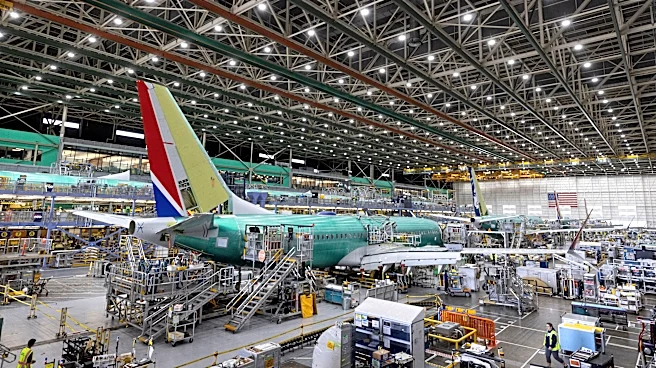
ensuring the durability of current aircraft models. The company is concentrating on understanding customer challenges and updating them on Boeing's progress. Pope noted that next-generation aircraft development would depend on aligning financial capacity, market readiness, and technological advancements. Despite improvements, Boeing's supply chain remains somewhat volatile, prompting the company to enhance collaboration with suppliers by sharing internal lessons and deploying experts to assist them. The integration of Spirit AeroSystems, a key aerostructures partner, is progressing well, with efforts focused on stabilizing and optimizing production quality.
Why It's Important?
Boeing's strategic focus on stability over new orders reflects the broader challenges facing the aviation industry, particularly in supply chain management and production quality. By prioritizing customer needs and ensuring the reliability of existing aircraft, Boeing aims to maintain its competitive edge and customer trust. The company's approach to supplier collaboration and integration of Spirit AeroSystems highlights the importance of addressing production bottlenecks and quality issues that have previously impacted Boeing's operations. This strategy could influence industry standards and practices, as other manufacturers may adopt similar measures to enhance supply chain resilience and product reliability.
What's Next?
Boeing's continued focus on stabilizing its operations and supply chain suggests that the company will likely maintain its current strategic direction in the near term. As the aviation market evolves, Boeing may gradually introduce next-generation aircraft once financial, market, and technological conditions align. The company's efforts to improve supplier relationships and production quality could lead to more efficient operations and potentially set new benchmarks for the industry. Stakeholders, including customers and investors, will be closely monitoring Boeing's progress in these areas, as successful implementation could enhance the company's market position and financial performance.